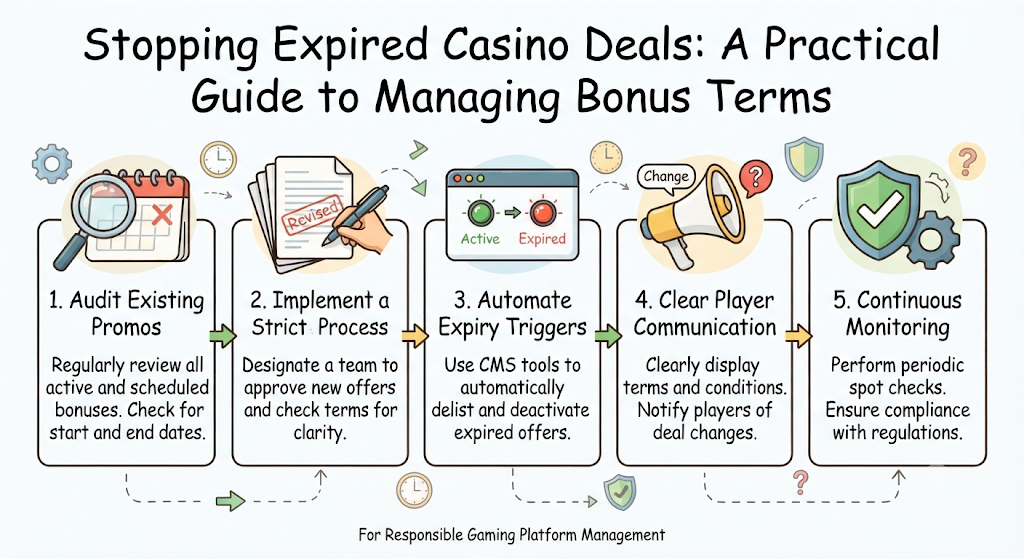
Nothing erodes reader trust faster than clicking through a detailed casino review only to find that the advertised welcome package expired three weeks ago—or that the wagering requirement quietly jumped from 30x to 45x. In the iGaming affiliate and review space, promotional volatility is a constant operational hazard. Operators adjust match percentages, swap eligible slot titles, shorten validity windows, and retire seasonal campaigns with little advance notice.
When a publishing site leaves outdated promotions live, the damage extends beyond user frustration. Regulatory bodies across major jurisdictions treat expired or inaccurate promotional claims as misleading advertising, which can jeopardize operator partnerships and search rankings alike. Keeping promotional data accurate requires more than occasional manual spot-checks; it demands a structured content lifecycle built around expiration triggers, standardized data storage, and clear editorial accountability.
Why Casino Bonus Terms Change So Frequently
Online gambling operators treat bonuses as dynamic acquisition levers rather than static product features. Several operational pressures drive frequent changes to promotional rules:
- Regulatory updates: Licensing authorities such as the UK Gambling Commission (UKGC), Malta Gaming Authority (MGA), and state-level regulators in North America regularly tighten rules around how “free” spins, wagering caps, and significant terms must be displayed.
- Margin and risk adjustments: When a specific bonus structure attracts high-volume bonus abuse or produces unfavorable player lifetime value, operators quickly tighten maximum bet limits, restrict payment methods like Skrill or Neteller, or lower maximum cashout ceilings.
- Seasonal and game-launch cycles: Reload offers, tournaments, and free spin bundles are frequently tied to new studio releases or calendar events, giving them hard built-in shelf lives.
- Geo-targeted variations: A single brand often runs distinct welcome offers across different countries or states, updating one regional funnel while leaving others untouched.
Understanding these drivers helps editorial teams separate evergreen brand information—such as licensing details, withdrawal speeds, and software providers—from volatile promotional parameters that require scheduled verification.
Separating Evergreen Content from Volatile Bonus Data
One of the most common publishing mistakes is hardcoding bonus figures directly into long-form review paragraphs, comparison intros, and FAQ answers. When a welcome bonus changes from “100% up to $500 + 100 Free Spins” to “150% up to $300,” an editor has to hunt through dozens of sentences across multiple pages to fix every mention.
A cleaner approach separates narrative analysis from structured promotional data:
- Centralize bonus variables: Store core promotional fields—bonus amount, minimum deposit, wagering requirement, validity period, promo code, and expiry date—in a single database table, custom post type, or structured shortcode system.
- Keep body copy descriptive rather than numeric: Write surrounding review text to explain how the operator structures its rewards and what players should check in the fine print, rather than repeating exact dollar amounts in every section.
- Display a visible “Last Verified” timestamp: Placing a clear verification date near bonus tables signals transparency to readers and gives internal editors an immediate audit trail.
| Content Layer | Examples | Update Frequency | Storage Method |
|---|---|---|---|
| Static Brand Facts | Year founded, corporate owner, primary license numbers | Annually or upon major corporate news | Standard article body |
| Platform Mechanics | Payment methods, KYC verification flow, mobile app availability | Quarterly | Standard article body with version notes |
| Promotional Terms | Match percentage, wagering multiplier, eligible games, expiry date | Weekly or via automated feed triggers | Centralized data table / dynamic shortcode |
| Time-Limited Campaigns | Holiday tournaments, prize drops, short-term free spin codes | Daily or upon campaign end date | Scheduled auto-expire blocks |
Building a Reliable Expiry and Audit Workflow
Preventing stale offers requires matching each promotion type with an appropriate tracking mechanism. Relying solely on memory or ad-hoc inbox checks inevitably leads to missed deadlines.
1. Capture Both Claim Deadlines and Usage Windows
Every bonus actually carries two distinct time constraints that editors must track separately:
- Promotional availability window: The final date a new or existing player can opt in or claim the offer.
- Bonus validity period: The number of days a player has to complete wagering requirements after claiming (for example, 7 days for free spins and 30 days for deposit matches).
Confusing these two dates leads to inaccurate summaries. Recording both fields in your editorial tracker ensures readers know both when an offer disappears and how much pressure they face once they activate it.
2. Automate Status Changes for Hard End Dates
Whenever an operator specifies an exact end date for a seasonal promotion or tournament, schedule the content block to transition automatically. Rather than leaving a dead link or an expired banner live, configure your CMS to either hide the temporary offer or swap it with a neutral fallback message noting that the promotion has ended while linking to the operator’s current active bonuses.
3. Schedule Tiered Verification Audits
Not every page on a casino site carries the same traffic or compliance risk. Organize recurring audits into tiers:
- Tier 1 (High-traffic comparison pages and top-ranked reviews): Audit weekly against the operator’s live landing page and full terms and conditions.
- Tier 2 (Secondary brand reviews and payment-specific bonus guides): Audit biweekly or monthly.
- Tier 3 (Archived news and older informational posts): Strip specific promotional numbers once the initial news cycle ends, converting the page into a historical or educational resource.
4. Standardize Affiliate Manager Communications
Affiliate newsletters and partner portals are primary sources for upcoming term changes, yet critical updates often get buried in promotional hype. Create a dedicated email alias for partner compliance notices and require editors to log every change notice into a shared changelog with three fields: Brand Name, Effective Date, and Pages Affected.
Critical Terms Editors Must Verify Before Publishing
Even when an offer is technically active, publishing incomplete terms creates the same trust and compliance problems as publishing an expired deal. Before clearing any bonus update for publication, verify these five elements directly on the operator’s terms page—not just on marketing banners:
- Wagering base: Confirm whether the multiplier applies strictly to the bonus amount (
35x bonus) or to the combined deposit and bonus (35x deposit + bonus), which effectively doubles the playthrough requirement. - Game contribution weights: Check whether slots contribute 100% while table games, live dealer titles, or high-RTP slots contribute 10%, 5%, or 0%.
- Maximum bet cap: Most active bonuses enforce a strict ceiling per spin or hand (commonly $5 or equivalent) while wagering is active. Exceeding it can void winnings.
- Excluded payment methods: E-wallets and certain prepaid vouchers are frequently excluded from welcome bonus eligibility.
- Geographic and licensing scope: Verify that the exact terms match the specific jurisdiction targeted by the page, as an operator’s MGA site and local regulated site rarely share identical bonus rules.
Handling Expired Offers Without Hurting SEO
Deleting a URL every time a seasonal bonus ends wastes accumulated search authority and creates broken internal links. Instead, manage expired promotions using clean content lifecycle practices:
- For recurring monthly or annual events: Keep a permanent evergreen URL (such as
/brand-holiday-promotions/) and update the page content each cycle, archiving past dates cleanly. - For one-off expired codes or retired welcome deals: Keep the page live if it still receives search traffic, clearly mark the original promotion as Expired at the top of the page, explain why it is no longer available, and direct readers to verified, currently active alternatives.
- For outdated news announcements: Add a brief editorial update box at the top of the post clarifying that the promotional terms mentioned reflect historical conditions at the time of publication.
Frequently Asked Questions
How often should casino bonus pages be checked for expired terms?
High-traffic comparison tables and flagship casino reviews should be audited at least once a week, while secondary reviews should be checked every two to four weeks. Any promotion with a stated end date should be flagged for review on the exact day it expires.
What is the difference between a bonus expiry date and a wagering validity period?
A bonus expiry date is the deadline by which a player must claim or opt into the promotion. A wagering validity period is the countdown—such as 7, 14, or 30 days—within which the player must meet all playthrough requirements after the bonus funds or free spins are credited.
Should you delete pages for expired casino bonuses?
No, unless the page has zero search traffic, no backlinks, and no historical value. Retaining the URL, clearly labeling the old promotion as expired, and guiding visitors toward active, verified offers preserves SEO value while protecting user trust.
Why do affiliate banners sometimes show different terms than the casino’s terms page?
Marketing banners are often updated on a different schedule than legal terms and conditions, or they may display default global figures rather than local jurisdictional rules. Always treat the operator’s full terms and conditions page as the authoritative source before publishing.
What happens if a site continues advertising an expired or inaccurate bonus?
Beyond losing reader credibility and increasing bounce rates, advertising inaccurate gambling terms can breach affiliate program terms of service and violate advertising standards enforced by gambling regulators, potentially leading to account suspension or commission clawbacks.
Conclusion
Readers visit casino comparison pages and deal directories expecting accurate numbers they can act on immediately. When a welcome offer, free spin bundle, or reload code expires without notice, it breaks that expectation and undermines the credibility of the entire platform. By separating volatile bonus parameters from evergreen review text, tracking both claim deadlines and wagering windows, and running consistent verification checks, casino publishers can keep every listed deal accurate, compliant, and trustworthy over the long run.
