Introduction
Walking onto a casino floor can feel overwhelming with all the flashing lights, ringing slot machines, and busy tables. Behind the scenes, managing the thousands of people who visit a casino every day is an even bigger challenge. Casinos need to know who is playing, what games keep them entertained, and how to reward their loyalty.
In the past, casino managers relied on memory or simple paper records to track regular visitors. Today, that approach no longer works. Modern gaming venues deal with massive amounts of data from physical slot machines, table games, and online websites.
Without the right tools, casino operators struggle to understand their players or spot loyal customers before they walk out the door. This is where casino CRM systems come in. These platforms turn raw data into useful insights, helping casinos build better relationships with their guests.
What Is a Casino CRM System?
A casino Customer Relationship Management (CRM) system is a digital platform designed specifically for the gaming and entertainment industry.
At its core, a CRM is a database that stores customer information. However, a casino CRM goes much further than a standard business software tool. It connects directly with slot machines, electronic table games, hotel booking systems, and online gaming platforms.
Why It Matters
In the gaming industry, competition is fierce. Players have endless choices, both online and at physical resorts. A casino CRM helps operators stand out by treating players as individuals rather than anonymous ticket-holders.
Real-World Example
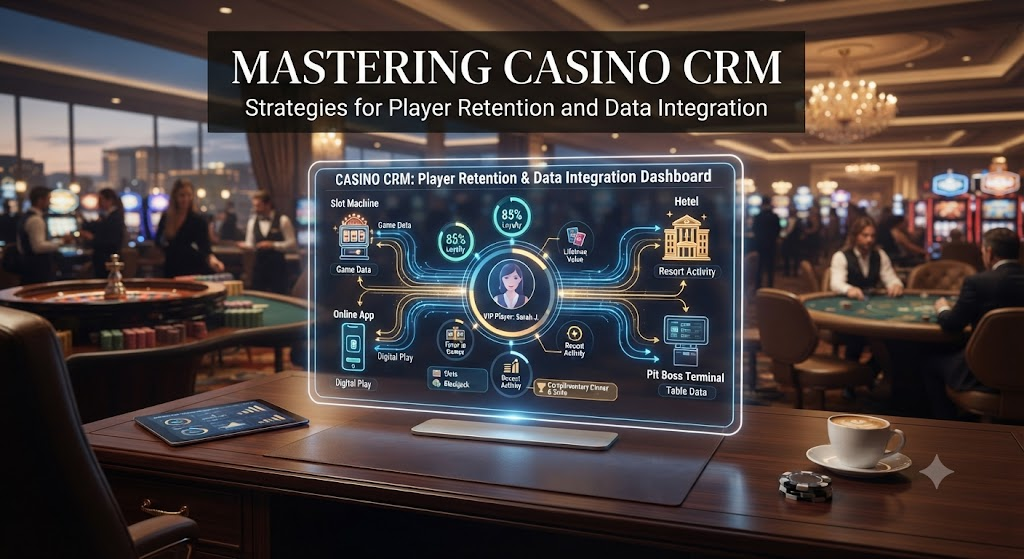
Imagine a player named Sarah who visits a resort twice a year. She prefers playing penny slot machines, stays in standard hotel rooms, and always eats at the Italian restaurant on-site. A good casino CRM tracks these habits. The next time Sarah visits, the casino can automatically send her an offer for a free dinner at her favorite restaurant, making her feel valued and increasing the chances she will return.
How Casino CRM Systems Work
A casino CRM acts as the central brain for a gaming operation. It gathers information from many different sources, organizes it, and makes it available to staff members across the property.
1. Data Collection
Every time a player uses a loyalty card at a slot machine, checks into a hotel room, buys a show ticket, or logs into an online casino, the system records that action. It tracks:
- Time spent playing
- Amount of money wagered
- Preferred game types
- Response to previous promotional offers
- Non-gaming spending (dining, spa, hotel)
2. Data Centralization
Casinos have separate departments for slot floors, table games, hotels, and marketing. A CRM pulls all these disconnected databases into one single profile for every player.
3. Segmentation
The system automatically groups players based on similar behaviors. For example, high-spending table game players go into one group, while casual weekend slot players go into another. This ensures marketing campaigns target the right audience.
4. Automated Action
Modern CRMs use triggers to launch automated responses. If a regular player stops visiting for two months, the system can flag their account and automatically send a special incentive to win them back.
Why Casino CRM Systems Matter
Casino CRM technology provides benefits for both the operator and the player. When used correctly, it transforms how a venue operates.
- Better Personalization: Players receive offers that match their actual preferences instead of random promotions they will ignore.
- Increased Retention: Keeping an existing player is much cheaper than finding a new one. CRMs help identify unhappy players or fading interest before the customer leaves for a competitor.
- Efficient Marketing Budgets: Operators stop wasting money on broad advertisements that do not work. Every marketing dollar goes toward campaigns driven by real player data.
- Improved Staff Efficiency: Hosts and customer service teams get instant access to a player’s history, allowing them to provide faster, more tailored service on the floor.
Important Factors to Understand
Before diving into how these systems operate daily, it helps to understand a few foundational concepts that shape modern casino software.
- Player Tracking Systems: The hardware and software on slot machines and tables that read player loyalty cards and record betting activity.
- The House Edge: The mathematical advantage that the casino has over players, which helps operators calculate the true long-term value of a customer.
- Omnichannel Gaming: The modern trend where players move seamlessly between physical slot floors and online mobile apps. A good CRM tracks both experiences as one.
Real-World Considerations
Installing and running a casino CRM is not a simple plug-and-play task. Operators face several practical challenges when adopting these systems.
Integration Nightmares
Casinos often use legacy software for slot accounting, hotel management, and point-of-sale systems. Connecting a new CRM to older systems can take months and requires careful technical coordination.
Staff Training
A software tool is only as good as the people using it. Floor hosts, marketing teams, and customer service staff must learn how to read CRM dashboards and apply insights during daily operations.
Data Privacy and Compliance
Gaming is a heavily regulated industry. Casinos must store sensitive player data securely and follow local privacy laws to protect customer information from breaches or misuse.
Common Mistakes
1. Collecting Too Much Useless Data
- What people do: Track every single minor action a player takes without a clear goal.
- Why it causes problems: The database becomes cluttered, making it hard to find useful insights.
- What to do instead: Focus on tracking key metrics that directly influence player satisfaction and business revenue.
2. Sending Too Many Generic Offers
- What people do: Blast the entire player database with the same daily promotional email.
- Why it causes problems: Players get annoyed by irrelevant messages and unsubscribe or ignore the casino.
- What to do instead: Use CRM segmentation to send targeted messages based on individual gaming habits.
3. Ignoring Offline Feedback
- What people do: Rely completely on automated software metrics while ignoring human feedback from floor staff.
- Why it causes problems: Computers miss subtle human cues, such as a player complaining about slow service.
- What to do instead: Combine CRM data with direct notes from floor hosts and customer service teams.
Risks and Limitations
- System Downtime: If the CRM crashes, loyalty kiosks may stop working, and staff may lose access to player accounts, causing long lines and frustration.
- Over-Reliance on Algorithms: Algorithms cannot predict every human behavior. Relying solely on automated triggers can sometimes result in tone-deaf marketing messages.
- High Implementation Costs: Quality casino CRM platforms require significant upfront investment in software licensing, hardware upgrades, and staff training.
Comparison / Decision Framework
When selecting a casino CRM system, operators should evaluate their options using a structured decision process:
| Evaluation Factor | Basic CRM Setup | Advanced Omnichannel CRM |
| Best For | Small slot parlors or local gaming halls | Large casino resorts with online operations |
| Data Sources | Basic loyalty card tracking | Slots, tables, hotel, spa, online app, POS |
| Automation | Simple scheduled email campaigns | Real-time trigger-based mobile offers |
| Cost & Complexity | Lower cost, easier setup | High investment, requires IT specialists |
Checklist
Use this checklist to evaluate your casino’s readiness for a new CRM system or to audit your current setup:
- Does the CRM connect physical floor play with online or mobile gaming activity?
- Can floor staff easily view a player’s history on mobile tablets while walking the floor?
- Are customer data protection and local regulatory compliance measures in place?
- Does the system allow automated triggers for win-back campaigns and special events?
- Is there a clear training plan for employees who will use the software daily?
Key Terms
- Casino CRM: Software designed to manage customer data and improve player relationships in the gaming industry.
- Player Tracking: The method of recording a customer’s bets, wins, and losses using a loyalty card.
- Segmentation: Dividing a customer base into groups based on shared behaviors or preferences.
- Omnichannel: An approach that connects physical casino experiences with digital online platforms.
- Retention: The ability of a casino to keep players returning over time.
- Trigger: An automated rule in software that performs an action when a specific event happens.
FAQs
What is the main difference between a standard CRM and a casino CRM?
A standard CRM manages general business customers, leads, and sales pipelines. A casino CRM integrates directly with gaming machines, table game tracking systems, and resort amenities to manage gambling behavior and loyalty rewards.
How do casino CRMs track table game players?
While slot machines track bets automatically through inserted cards, table game tracking relies on pit bosses who log player buy-ins, average bets, and time played into terminal systems connected to the CRM.
Can a casino CRM help prevent problem gambling?
Yes. Modern systems can track unusual spending spikes, rapid losses, or round-the-clock play. Responsible operators use these insights to flag risky behavior and offer support resources to players.
Do small casinos need a CRM system?
Even small venues benefit from tracking regular visitors. While small operations may not need enterprise-grade multi-property suites, a basic player database helps improve customer service and retention.
How does player data stay secure in a casino CRM?
Casinos use encrypted databases, strict user access controls, and secure cloud servers to protect player information and comply with regional data privacy laws.
Conclusion
Casino CRM systems have moved from being optional luxury tools to absolute necessities in modern gaming. By turning complex player data into clear, actionable insights, these platforms help operators build stronger relationships with their guests.
Success comes down to balance. Technology should support, not replace, genuine hospitality. When a casino uses CRM data to understand player preferences and deliver thoughtful service, both the player and the business win.
