Introduction
The online gambling industry is one of the most competitive digital spaces in the world. Thousands of platforms compete for the attention of players, all offering similar slots, table games, and welcome bonuses. In this crowded marketplace, traditional advertising channels like social media and search engines often enforce strict restrictions, high fees, and complex compliance hurdles.
Because of these barriers, digital operators need a sustainable way to stand out. That is where content marketing comes in.
Content marketing is not just about writing blog posts or publishing game reviews. It is about building a bridge between a casino brand and its audience by answering real player questions, explaining complex game rules, and promoting safe gambling practices. However, doing this successfully requires navigating a maze of legal regulations, SEO challenges, and user trust issues.
This guide explores how to build a powerful casino content marketing strategy that drives organic traffic, keeps players engaged, and protects your brand’s reputation.
What Is Casino Content Marketing?
Casino content marketing is a specialized digital marketing strategy focused on creating and sharing valuable, relevant, and accurate content tailored to casino players and sports bettors.
Instead of directly pitching a casino platform with aggressive sales language, content marketing provides genuine utility. It answers questions like “How do wagering requirements work?”, “What is the house edge in blackjack?”, or “How do I set a budget for sports betting?”
Why Does It Matter?
In the iGaming sector, player trust is everything. Users are depositing real money, so they need to know a platform is fair, secure, and transparent. Content marketing builds this trust over time. It positions a website as an authority in the industry, improves organic search engine rankings, and lowers long-term customer acquisition costs compared to paid advertising.
How Casino Content Marketing Works
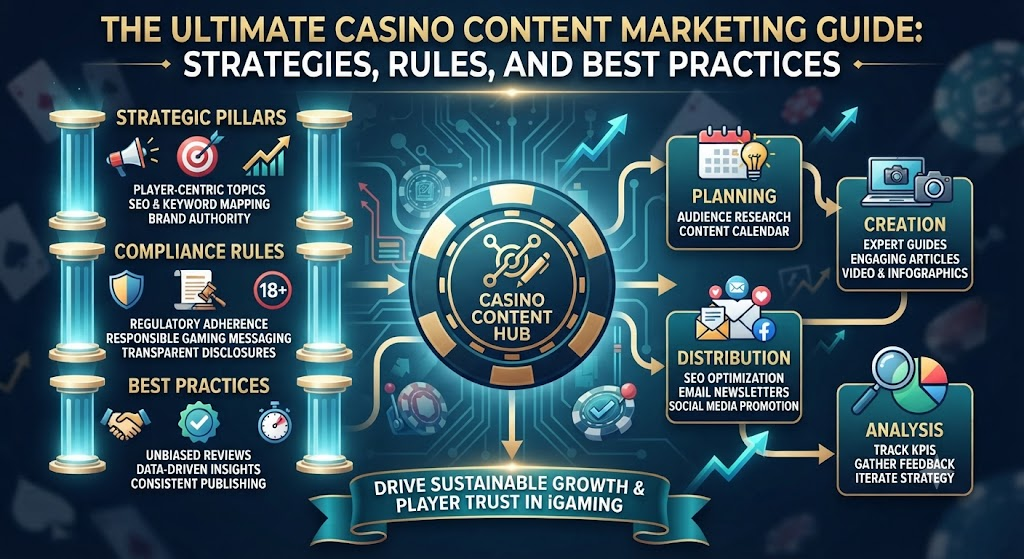
A successful casino content marketing program operates as an ecosystem where different types of content serve different stages of the player journey. The process generally follows a structured workflow:
- Audience Research: Identifying what potential players are searching for, such as game strategies, bonus explanations, or payment methods.
- Content Creation: Producing accurate, high-quality guides, reviews, and news articles that answer those search queries.
- SEO Optimization: Structuring the content so search engines can easily index and rank it for relevant keywords.
- Compliance Review: Ensuring all claims, bonus terms, and jurisdictional statements comply with local gambling regulations.
- Distribution & Link Building: Promoting the content through organic search, social channels, and industry partnerships to build domain authority.
Core Pillars of an Effective iGaming Strategy
To build a sustainable content engine for a domain like Casinobullseye.com, you must focus on specific content pillars that address player intent and search engine requirements.
1. Game Guides and Rules
Many players want to understand how a game works before risking their money. Detailed, easy-to-read guides on blackjack strategies, roulette odds, or slot volatility attract high-intent search traffic.
2. Bonus and Promotion Explanations
Bonuses are a major draw for online casinos, but they often come with confusing terms. Content that breaks down complex offers into simple language builds immense trust with readers.
3. Casino and Software Reviews
Players constantly search for honest reviews of online casinos and software providers (like NetEnt, Evolution, or Pragmatic Play). Objective reviews that highlight both pros and cons perform exceptionally well.
4. Responsible Gambling Resources
Promoting safe play is not just an ethical duty; it is a regulatory requirement in most jurisdictions. Content dedicated to bankroll management, problem gambling signs, and support organizations protects players and elevates brand credibility.
Practical Examples of Casino Content in Action
To understand how this looks in practice, consider two different approaches to writing about casino bonuses:
- Poor Approach (Sales-Heavy): “Sign up now at our top-rated casino and get an amazing 500% bonus! Don’t miss out on free cash—play today!” (This sounds spammy, lacks substance, and triggers ad blockers or search engine penalties).
- Professional Approach (Educational): “Understanding Casino Deposit Match Bonuses: How Wagering Requirements Affect Your Payout.” (This explains what a 35x playthrough requirement actually means using a clear $100 deposit example, helping the user make an informed financial decision).
Real-World Considerations: Challenges in the iGaming Niche
Content marketing in the casino industry is significantly harder than in standard niches like lifestyle or technology. Operators and publishers must navigate several unique hurdles:
- Strict Search Engine Scrutiny: Google and other search engines apply strict “Your Money or Your Life” (YMYL) standards to gambling sites. Content must demonstrate high levels of E-E-A-T (Experience, Expertise, Authoritativeness, and Trustworthiness).
- Constantly Changing Regulations: Gambling laws vary wildly by country, state, and province. Content that is legal to publish in one region may violate local advertising laws in another.
- Affiliate Link Disclosures: Transparent disclosure of commercial relationships is legally mandatory in most major markets.
Common Mistakes Beginners Should Make
When launching a casino content strategy, teams often fall into predictable traps.
| What People Do | Why They Do It | Why It Causes Problems | What They Should Do Instead |
|---|---|---|---|
| Keyword Stuffing | To trick search engines into ranking faster. | Search engines penalize the site, and readers find the text unreadable. | Write naturally, focusing on user intent and semantic relevance. |
| Ignoring Local Regulations | To cast the widest possible net globally. | Can result in heavy legal fines or blacklisting by regulatory bodies. | Geo-target content and restrict marketing to licensed jurisdictions. |
| Copying Competitor Content | To save time and quickly build page volume. | Search engines flag duplicate content, resulting in zero organic visibility. | Conduct original research, use unique examples, and offer deeper insights. |
| Hiding Bonus Terms | To make promotional offers look more attractive. | Destroys reader trust when players discover hidden restrictions. | Be completely transparent about wagering limits, game weightings, and expiry dates. |
Risks and Limitations
Failing to manage your content marketing strategy correctly can lead to severe operational consequences:
- Algorithmic Penalties: Low-quality, scraped, or purely promotional content is regularly targeted by core search engine updates.
- Brand Erosion: Publishing inaccurate RTP (Return to Player) percentages or misleading odds damages your brand’s reputation permanently.
- Regulatory Sanctions: Promoting unlicensed operators or failing to include mandatory responsible gambling messaging can result in severe legal penalties.
Decision-Making Framework for Casino Content
Before publishing any piece of content on your platform, run it through this simple evaluation framework:
- Verify Search Intent: Does this article answer a real question that players are actively searching for?
- Check Accuracy: Are game rules, odds, and bonus explanations factually correct and up to date?
- Ensure Compliance: Does the content include necessary disclaimers, age restrictions, and responsible gambling links?
- Evaluate Value: Does the reader walk away smarter, or is it just filler text designed to hit a word count?
- Review Tone: Is the language simple and accessible, avoiding robotic jargon while maintaining professional credibility?
Key Terms
- RTP (Return to Player): The theoretical percentage of all wagered money that a casino game will pay back to players over time.
- Volatility / Variance: A measure of how often and how much a casino game pays out. Low volatility means frequent small wins; high volatility means rare large wins.
- Wagering Requirement: The number of times a player must play through bonus funds before they can withdraw any associated winnings.
- House Edge: The mathematical advantage that the casino holds over the player, ensuring the house wins over the long run.
- YMYL (Your Money or Your Life): Google’s classification for pages that could impact a user’s future happiness, health, financial stability, or safety—which includes online gambling.
- Affiliate Marketing: A performance-based marketing model where publishers earn a commission for referring depositing players to an online casino.
- Geo-Targeting: The practice of delivering different content or offers to users based on their geographic location.
- Self-Exclusion: A tool that allows players to voluntarily block themselves from accessing gambling sites for a set period.
FAQs
What is the main goal of casino content marketing?
The main goal is to attract, educate, and retain players by providing valuable, transparent, and compliant information, thereby building long-term brand trust and organic search visibility without relying solely on paid ads.
Why is SEO difficult for casino websites?
Casino sites fall under Google’s strict YMYL (Your Money or Your Life) guidelines. Because real money is involved, search engines demand exceptionally high standards of expertise, authoritativeness, and trustworthiness before ranking content.
Should casino content discuss winning strategies?
Yes, but with strict honesty. Content should clearly explain game mechanics and probabilities while emphasizing that casino games are games of chance with a permanent house edge. Never promise guaranteed wins.
How do you handle responsible gambling in content?
Responsible gambling information should be integrated naturally into your content ecosystem. This includes providing links to support organizations, explaining how to set deposit limits, and warning against chasing losses.
Can I copy game rules from other casino sites?
No. Copying content directly leads to duplicate content penalties from search engines. Always rewrite game rules and guides using your own unique explanations, examples, and formatting.
Conclusion
Casino content marketing is a powerful tool for building a sustainable, trusted iGaming brand in a crowded market. By replacing aggressive sales pitches with clear, accurate, and educational guides, operators can successfully navigate strict regulations and earn the long-term loyalty of players. Focus on transparency, maintain rigorous editorial standards, and always prioritize the user’s need for honest, practical information above all else.
