Introduction
Most people gamble for fun. They spend a small amount. Then they stop. But gambling is built to keep people playing. For some players, this can turn into a real problem.
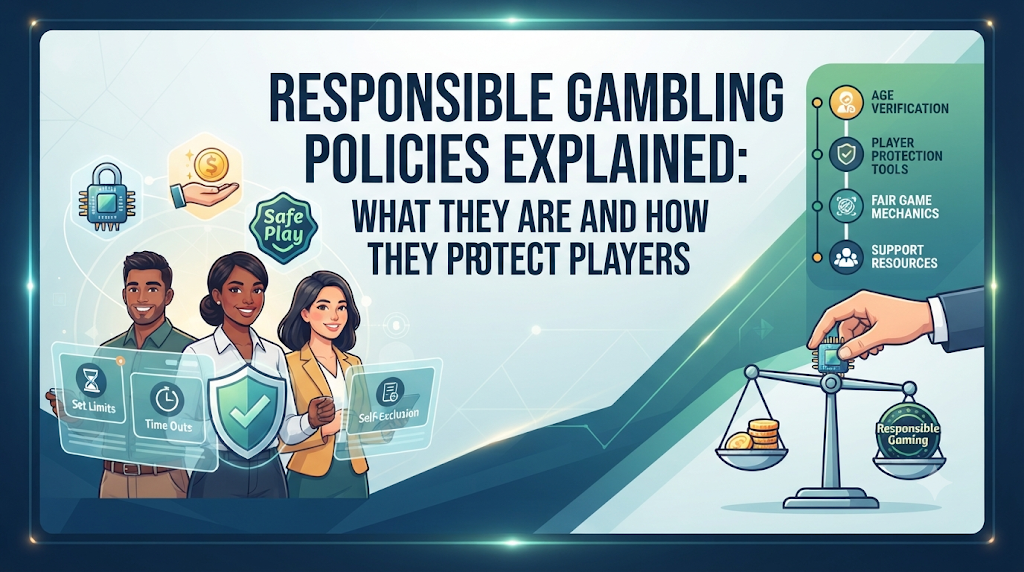
Responsible gambling policies exist to help with this. These are not just warning messages on a website. They are real tools. Deposit limits. Time trackers. Self-exclusion lists. Each tool does a specific job.
This guide explains what these tools do. It shows how they work. It also helps you judge if a platform truly cares about player safety, or just says it does.
What Responsible Gambling Means
Responsible gambling is a simple idea. It means giving players real control over their own gambling. It also means giving players clear facts about the risks.
This is not about stopping people from gambling. It is about safe choices. Players should know the risks. Players should be able to set their own limits. Players should have an easy way to get help if they need it.
Why These Policies Exist
Gambling affects the brain’s reward system. This can make it hard to stop, even for people who want to. This is not just about willpower. It works the same way other habits can form in the brain.
Because of this, gambling carries real risk. This risk is different from most other types of fun. So governments made rules. Licensed gambling companies must follow these rules. This is why many platforms offer the same safety tools. The rules come from regulators, not from company choice alone.
The Main Tools Used in Responsible Gambling
Deposit Limits
What it is: A cap on how much money you can add to your account. This can be a daily, weekly, or monthly limit.
Why it matters: This stops too much money going in before you even play. It works early, before any loss happens.
How it works: You set your own limit. You can lower it anytime. Raising it usually takes 24 hours. This wait time stops quick, emotional decisions.
Self-Exclusion
What it is: A way to block yourself from gambling. This can be on one site. In some places, it blocks you from many sites at once.
Why it matters: This removes the choice completely. This often works better than limits alone.
How it works: You pick a time period. This can be six months, a few years, or forever. Once you start it, it is hard to stop early. This is done on purpose.
Reality Checks
What it is: A pop-up message during play. It shows how long you have played. It often shows your wins and losses too.
Why it matters: Time can slip by fast during play. A reminder breaks this pattern.
How it works: These pop-ups appear every 30 or 60 minutes. You must read and close them. You cannot ignore them and keep playing.
Age Checks
What it is: A check to prove you are old enough to gamble.
Why it matters: This stops minors from playing. It protects both the law and young people.
How it works: Real gambling sites check ID documents. They do not just ask you to click “yes, I am 18.”
Loss Limits
What it is: A cap on how much money you can lose. This is different from a deposit limit.
Why it matters: A deposit limit controls money going in. A loss limit controls money actually lost. This is a stronger form of control.
How it works: Not every site offers this. Check if a site has a separate loss limit tool.
How Rules Shape What Sites Must Offer
Licensed gambling sites do not choose these tools on their own. Rules from regulators require them. Examples include the UK Gambling Commission and the Malta Gaming Authority. Each region has its own rules.
Most rules require the same basic tools. Deposit limits. Self-exclusion. Age checks. Clear links to support groups. Sites must also report on how well these tools work.
This matters for one big reason. A site without a real license may skip these tools. Or it may offer weak versions that look real but do not work well.
Real Safety Tools vs. Fake Safety Tools
Some sites just put a page online. It says “gamble responsibly.” But the tools behind it may not work well.
Signs of real safety tools:
- Lower limits work right away
- Self-exclusion is hard to undo
- Clear links to real help groups
- Easy to find license information
Signs of fake safety tools:
- Tools are hidden deep in account settings
- You can beat self-exclusion by making a new account
- Vague words like “play responsibly” with no real tool
- License information is hard to find
The gap here matters a lot. A site can use all the right words. But if the tools do not truly work, the words mean nothing.
Common Mistakes Players Make
Trusting limits alone to fix a problem. Limits help. But if gambling already feels hard to control, a 24-hour wait to raise a limit may not be enough. It helps to add self-exclusion or talk to a support group too.
Setting a limit too high. Some players set a limit close to what they already spend. This gives no real protection. A good limit feels a bit too low, not just right.
Not checking if a site has a license. Tools on a site with no license may not be real. No one checks if they work.
Waiting until things get bad to use self-exclusion. This tool works best early. Do not wait for a crisis.
Ignoring reality check pop-ups. These pop-ups can feel annoying. Some players close them without reading. This defeats the point of the tool.
Signs Gambling May Be a Problem
These tools work best when you also know the warning signs. Watch for these patterns:
- Spending more time or money than planned, again and again
- Betting more to win back money you lost
- Feeling angry or worried when you are not gambling
- Hiding how much you gamble from family or friends
One sign alone may not mean much. But a few signs together are worth taking seriously. This is a good time to use self-exclusion. It is also a good time to talk to a support group.
Simple Steps to Protect Yourself
Step 1: Set a deposit limit before you start playing often.
Step 2: Pick a limit lower than what you would normally spend.
Step 3: Read reality check pop-ups. Do not just close them.
Step 4: Check that your gambling site has a real license.
Step 5: If you notice warning signs, use self-exclusion right away.
Step 6: Know where to find help outside the gambling site itself.
Quick Comparison Table
| Tool | What It Controls | Best Time to Use It |
|---|---|---|
| Deposit limit | Money going in | Set early, before you need it |
| Loss limit | Money actually lost | When deposit limits are not enough |
| Reality check | Time and awareness | Every time you play |
| Self-exclusion | All access to gambling | When patterns feel hard to control |
| Age check | Access for minors | Always, done by the platform |
Checklist Before You Trust a Gambling Site
- Does the site show a clear, real license?
- Can you set and lower limits easily?
- Does lowering a limit work right away?
- Is self-exclusion hard to undo once started?
- Do reality check pop-ups appear during play?
- Are links to help groups clear and easy to find?
Key Terms
- Deposit Limit: The most money you can add to your account in a set time.
- Self-Exclusion: A way to block yourself from gambling for a set time.
- Reality Check: A pop-up that shows your play time and results.
- Loss Limit: The most money you can lose in a set time.
- Licensing Body: The group that makes and checks gambling rules.
- Chasing Losses: Betting more to try to win back money you lost.
- Cooling-Off Period: A short break from gambling, shorter than full self-exclusion.
Frequently Asked Questions
1. What is the difference between a deposit limit and a loss limit?
A deposit limit caps money going into your account. A loss limit caps money you can actually lose.
2. Can I undo self-exclusion once I start it?
Most sites make this hard on purpose. You often must wait a long time, even past your original choice.
3. Are these tools required by law?
Yes, on licensed sites. Regulators require these tools as part of the site’s license.
4. Do unlicensed sites offer the same safety tools?
Not always. Without a regulator checking, these tools may not work as promised.
5. How do reality check pop-ups actually help?
They stop you mid-play. They remind you how much time and money you have used.
6. Is a low deposit limit enough on its own?
It helps, but it may not be enough alone. Add self-exclusion or support if you need more control.
7. What are common warning signs of a gambling problem?
Spending more than planned, chasing losses, feeling anxious, and hiding your gambling from others.
8. Should I wait for a big problem before using self-exclusion?
No. This tool works best when used early, not as a last resort.
9. How do I check if a site is properly licensed?
Look for a license number. Check it on the regulator’s own website.
10. Do all sites check age the same way?
No. Real sites check ID documents. Weak sites may just ask you to click a box.
Conclusion
Responsible gambling tools only work if they are built right. A deposit limit should work the moment you lower it. Self-exclusion should be hard to undo. Reality checks should be impossible to ignore. Learn what each tool does. Check if a site has a real license. Use these tools early, not after a problem starts. This is what turns good words into real protection.
