A casino affiliate site rarely breaks all at once. Instead, it slows down quietly. A new bonus table gets pasted into twenty reviews on Friday afternoon. An operator changes its welcome terms on Monday morning. A plugin update clashes with a custom comparison block on Wednesday. By the end of the month, readers see conflicting offer details, search crawlers burn time on thin tag archives, and editors spend hours hunting down outdated links.
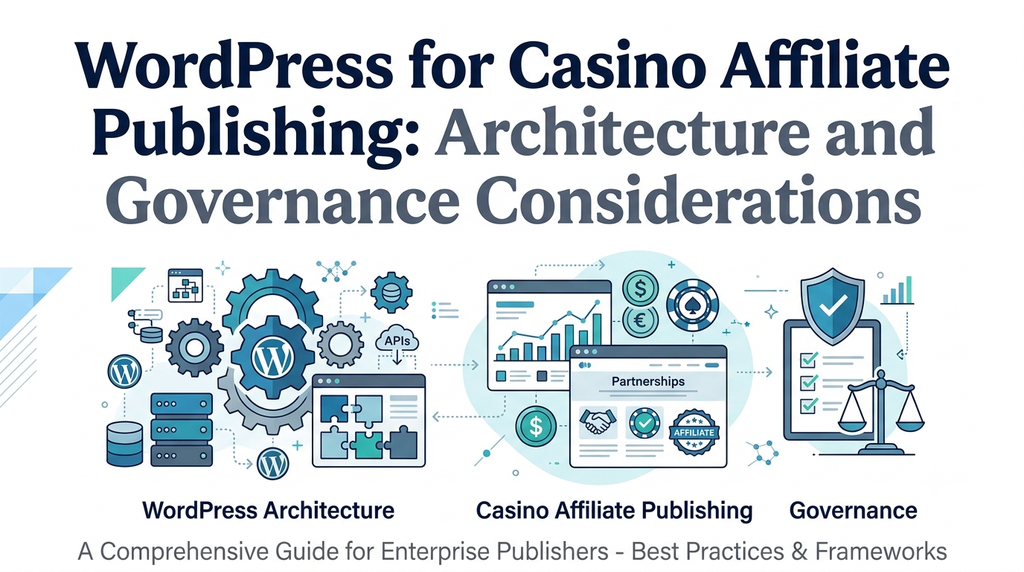
Running a casino affiliate publishing operation on WordPress takes more than picking a fast theme and installing an SEO plugin. Because gambling rules, licensing boundaries, and operator terms shift constantly, your site structure and editorial rules have to hold up under pressure. WordPress for casino affiliate publishing works best when technical architecture and content governance are designed together from the ground up.
This guide looks at how to structure a WordPress site for casino affiliate publishing and how to put practical governance controls in place so your site stays accurate, maintainable, and compliant across jurisdictions.
Structuring Content Around Operators, Offers, and Jurisdictions
Many WordPress sites treat every piece of content like a standard blog post. On a casino affiliate site, that approach gets messy fast. A single operator might run different promotions depending on the country or state, offer dozens of games, and update its bonus rules without warning.
When everything lives in plain posts with loose tags, small changes turn into manual cleanup jobs. Separating core entities makes updates cleaner and helps readers find relevant details without wading through clutter.
Custom Post Types vs. Standard Posts
Standard posts work well for news, guides, and analysis that have a clear publication date. Core affiliate assets usually benefit from custom post types (CPTs) tailored to how readers compare options:
- Operators / Casinos: Holds core details like brand name, launch year, supported payment methods, licensing details, and general platform notes.
- Offers / Bonuses: Captures promotional terms separately from the main brand profile, making it easier to update wagering rules or expiration dates without rewriting the full review.
- Games / Slots (where relevant): Useful when a site covers specific titles, providers, or game mechanics alongside operator recommendations.
Keeping offers distinct from general commentary reduces copy-paste errors. If a bonus code changes, you update the offer record rather than scanning every mention across older articles.
Taxonomies That Match Search Intent
Categories and tags should reflect how people actually browse and compare platforms, not every minor feature you can think of. Over-tagging creates dozens of near-empty archive pages that add little value for visitors or search engines.
Focus taxonomies on clear groupings such as:
- Jurisdiction or Region: Helpful for separating rules, availability, and age requirements by location.
- Game Type or Feature: Such as live dealer, table games, or mobile play, when genuinely distinct.
- Payment Method: Useful when readers care about deposit or withdrawal options.
If a taxonomy term only applies to one or two pages, fold it into a broader category or handle it inside the entry fields instead.
Designing Clean URLs, Navigation, and Internal Links
Even well-organized data feels scattered if site navigation and internal links are haphazard. Readers visiting an affiliate site usually want quick answers: Is this platform licensed where I live? How do the terms compare? What are the main trade-offs?
A clear hierarchy answers those questions in fewer clicks.
Logical URL Paths and Hub Pages
Group related pages under predictable paths so both users and crawlers understand how sections relate. For example, keeping operator reviews, payment guides, and comparison hubs in clear lanes prevents orphan pages and makes site audits much easier.
Hub pages—such as payment guides or category overviews—work best when they summarize key criteria upfront and link naturally to detailed reviews or deeper guides. Avoid stuffing hub pages with repetitive promotional blocks that say the exact same thing ten times.
Internal Linking That Guides Real Decisions
Internal links should connect related topics where a reader naturally needs more context. A review mentioning withdrawal times can link to a payment methods guide; a guide on bonus terms can link to an explanation of wagering requirements.
Watch out for two common traps:
- Over-linking identical anchor text: Repeating the exact same phrase on every link looks mechanical and gives readers less context about what they will click into.
- Orphaned or buried pages: New guides or updated reviews need clear paths from relevant hubs or recent updates so they are easy to discover.
Database, Performance, and Plugin Discipline
Affiliate sites often accumulate plugins over time—page builders, table plugins, link managers, caching tools, security scanners, and schema plugins. Every extra layer adds potential conflicts and maintenance overhead.
As shown in the WordPress core database layout, content and metadata connect through wp_posts, wp_postmeta, wp_terms, and wp_term_taxonomy. When plugins store bulky custom fields or run heavy queries on every page load, database bloat and slow responses can follow—especially during traffic spikes or bulk updates.
Keeping the Plugin Stack Lean
Before installing any plugin, ask whether WordPress core, a lightweight custom snippet, or a single multi-purpose tool already covers the job. Fewer active plugins means fewer security patches, fewer CSS/JS conflicts, and easier debugging when something breaks.
Good habits for technical stability include:
- Test updates safely: Avoid pushing major plugin or theme updates straight to a live site without checking for layout or tracking issues.
- Audit custom fields: Remove leftover metadata and unused shortcodes when retiring old templates or plugins.
- Cache thoughtfully: Cache static pages for speed, while making sure dynamic elements or regional notices still behave properly.
Protecting Outbound Links and Tracking
Affiliate links need consistent handling across templates, tables, and buttons. If links are hardcoded in dozens of places, fixing a broken destination or updating parameters becomes slow and error-prone.
Centralizing link management—or using clean, consistent fields inside your custom post types—keeps destinations accurate and makes audits straightforward. Always check that links open and resolve cleanly on both desktop and mobile devices.
Editorial Governance When Rules and Offers Shift
Technical structure handles storage and delivery, but content governance keeps what you publish accurate over time. In gambling and iGaming, terms change frequently, regional laws vary widely, and misleading claims carry real legal and reputational risk.
A practical governance model does not need heavy bureaucracy. It just needs clear ownership so nothing slips through the cracks.
Clear Roles and Review Checkpoints
Define who is responsible for each step before content goes live:
- Writers and Researchers: Gather verified facts, check current terms, and write in plain, accurate language.
- Editors: Check clarity, structure, neutrality, and internal consistency across related pages.
- Compliance / Fact-Check Reviewers: Verify age notices, jurisdictional boundaries, responsible gambling information, and accurate representation of promotional terms.
Even on a small team, separating drafting from final review catches mistakes that a tired writer easily misses.
Fact-Checking, Disclosures, and Responsible Gambling Standards
Accuracy matters most where readers make decisions involving money and local law. Never invent bonus amounts, payout speeds, licensing claims, or user outcomes, and never present gambling as a way to make money or solve financial problems.
Strong editorial governance includes:
- Clear disclosures: Make affiliate relationships easy for readers to understand without hiding behind vague wording.
- Jurisdiction accuracy: Respect local laws and age limits, and avoid implying a platform is available or legal everywhere.
- Responsible gambling visibility: Include clear, helpful responsible gambling reminders and support resources where appropriate, rather than burying them in tiny footer text.
- Date-stamped verification: Record when offers, rules, or reviews were last checked so stale pages stand out during audits.
Maintenance Cadence and Content Lifecycle
A casino affiliate site is never truly “finished.” Promotions expire, operators rebrand, regulations tighten, and older guides start showing their age. Without a regular maintenance routine, outdated pages quietly erode trust.
Scheduled Audits and Refresh Cycles
Match review frequency to how fast information changes:
- High-volatility pages (active offers, comparisons, top lists): Check frequently so expired promotions or changed key terms do not linger.
- Evergreen guides and explanations: Review periodically to verify that terminology, rules, and links still hold up.
- Low-value or overlapping pages: Consolidate thin articles that target the same topic, or retire pages that no longer serve readers.
Handling Outdated or Discontinued Operators
When an operator shuts down, exits a market, or changes its standing, leaving an active-sounding recommendation online hurts credibility. Decide on a clear playbook—such as updating the status clearly, redirecting to a relevant hub only when appropriate, or removing outdated calls to action—and apply it consistently.
Bringing Architecture and Governance Together
The strongest WordPress casino affiliate sites treat technical structure and editorial rules as two halves of the same system. Clean post types and taxonomies make updates faster; lean plugins and sensible URLs keep the site fast and easy to navigate; clear editorial workflows and review cycles protect accuracy and user trust.
Start by fixing your biggest bottleneck—whether that is scattered offer details, bloated plugins, or unverified pages waiting on a review. Small, steady improvements to architecture and governance pay off every time rules change.
Frequently Asked Questions
Should I use custom post types or standard WordPress posts for casino reviews?
Custom post types are often better for core entities like operators and offers because they keep structured details separate from regular blog posts. Standard posts still work well for timely news, industry commentary, and general guides.
How often should bonus terms and operator details be reviewed?
High-change items like active promotions and comparison tables need much more frequent checks than evergreen educational guides. The right schedule depends on how many operators you cover and how often their terms shift in your target regions.
Do I need dozens of WordPress plugins to run an affiliate site well?
No. A focused set of reliable plugins—paired with clean custom fields or lightweight code where needed—is usually easier to maintain and less prone to conflicts than stacking overlapping tools.
Why is content governance critical in casino affiliate publishing?
Promotional rules change often, laws and age restrictions vary by location, and readers rely on accurate information. Governance gives your team clear checks for disclosures, factual accuracy, and responsible gambling standards before and after publishing.
How do I prevent thin or overlapping pages from hurting my site?
Plan categories and guides around distinct reader questions rather than publishing near-duplicate pages with minor wording tweaks. Consolidating overlapping articles often creates a clearer, more helpful resource.
Conclusion
Building a durable casino affiliate site on WordPress comes down to aligning solid technical structure with clear editorial rules. When custom post types, lean plugins, and logical URL paths work together, your team can update changing promotions and regional details without breaking layouts or creating thin archive clutter. At the same time, consistent review workflows, honest disclosures, and scheduled content audits keep older pages accurate and protect reader trust in a heavily regulated space. Rather than trying to overhaul everything at once, start by organizing your most volatile offer data and setting clear ownership for fact-checking. That steady discipline turns WordPress into a reliable publishing platform that scales safely over time.
