A single bonus code can go stale in minutes when a promotion ends early or a jurisdiction updates its advertising rules. For an iGaming publisher running slot reviews, bonus comparisons, game guides, and regional landing pages, keeping hundreds or thousands of pages accurate is an everyday operational grind.
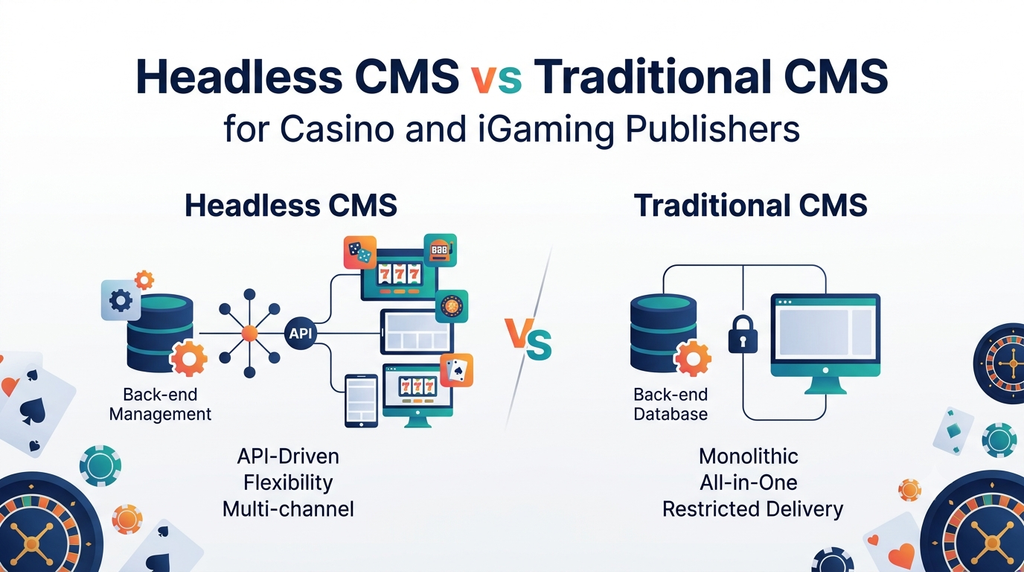
Choosing between a headless CMS vs traditional CMS for casino and iGaming publishers comes down to how tightly your content is tied to your front-end website. A traditional (coupled) CMS stores content and builds the web pages together in one system. A headless CMS stores structured content in a back-end repository and sends it over APIs to whatever front-end displays it.
How Coupled and API-First Systems Handle iGaming Content
In a traditional CMS, themes and templates sit directly on top of the database and content editor. When a writer publishes a review or updates a wagering requirement, the CMS renders the HTML page using a built-in template and serves it to the browser. That tight link makes setup straightforward, especially for small teams that rely on pre-built themes and plugins.
A headless CMS splits the back-end editor from the front-end presentation layer. Editors enter structured fields—such as a casino name, payout speed range, payment methods, bonus terms, and jurisdiction tags—without worrying about visual layout. A separate front-end application (built with a modern web framework) pulls those fields via REST or GraphQL APIs and renders the page.
For iGaming publishers, that structural split changes how a single piece of data behaves across a site. Instead of hunting down the same welcome offer across twenty review pages and comparison tables, structured content lets one update feed multiple views—provided your engineering team builds the front-end logic to support it.
Where Headless Architecture Helps—and Where It Hurts
Decoupling your content layer solves several headaches that hit growing casino media sites as their catalogs expand.
Strengths of a Headless Approach for iGaming Sites
- Multi-channel and multi-brand delivery: If you run regional sub-sites, comparison hubs, newsletters, or mobile apps alongside your main site, APIs let you reuse core game and operator data without copying and pasting.
- Granular geo-targeting and compliance swaps: Gambling rules vary sharply by country, state, or province. Structured fields and front-end routing make it easier to swap restricted offers, age disclaimers, or local responsible gambling resources for specific regions.
- Front-end performance freedom: Developers can optimize the front-end stack independently, pair it with edge caching, and avoid plugin bloat that often slows down heavy comparison tables and game directories.
Hidden Costs and Friction
- Higher upfront build and maintenance: A headless CMS gives you no default website out of the box. You need developers to build templates, routing, search, and preview workflows—and to keep that front-end code updated over time.
- Tricky visual previews for editors: Because editors do not see the final rendered page inside a single monolithic dashboard, live previewing across devices or regional rules requires proper integration.
- Overkill for lean teams: If a solo editor or small team publishes standard articles and wants quick theme tweaks without waiting on a developer sprint, a decoupled setup can slow down day-to-day publishing.
When a Traditional CMS Still Makes Sense
Traditional platforms stay popular in iGaming publishing for good reason. They get a site off the ground quickly, offer familiar editorial screens, and provide huge ecosystems of themes, SEO plugins, and analytics integrations out of the box.
A coupled CMS often fits best when a site is early-stage, budget-conscious, or run by non-technical staff who need to spin up landing pages fast. Risks show up later when dozens of third-party plugins stack up, database queries slow down large game lists, or manual edits across many pages lead to outdated bonus claims.
| Decision Factor | Traditional (Coupled) CMS | Headless CMS |
|---|---|---|
| Launch & Setup Speed | Fast using existing themes and plugins | Slower; requires custom front-end development |
| Editorial Workflow | Familiar all-in-one dashboard and visual editing | Structured fields; previewing requires front-end setup |
| Multi-Page Data Updates | Often manual unless custom fields or scripts are built | Strong when content is modeled as reusable entries |
| Regional & Compliance Flexibility | Possible, but can get messy across many templates | Clean separation between data rules and display views |
| Engineering Dependency | Lower for basic changes; higher when debugging plugins | Higher throughout build, hosting, and maintenance |
Practical Checks Before You Switch or Build
Picking a CMS is rarely just a technical preference; it is an operational commitment. Before committing to either path, walk through four practical checks with your editorial and technical leads:
- Audit how often your core data changes: If bonus terms, promo codes, or availability statuses shift weekly across dozens of pages, reusable structured content will save hours of repetitive editing.
- Count your engineering hours realistically: Make sure you have ongoing developer support for front-end updates, API caching, and security patches—not just a one-time agency build.
- Map your regional and regulatory needs: Check how differently pages must look or behave by location, and confirm your setup can update legal notices and responsible gambling information reliably.
- Protect organic search fundamentals: Whether coupled or headless, ensure clean URLs, fast mobile load times, accurate metadata, and server-rendered or properly cached HTML so search engines can crawl your pages efficiently.
(Note: This article covers publishing technology and content architecture for informational purposes only; it is not legal or regulatory advice, and readers should always follow local gambling laws and age restrictions.)
Frequently Asked Questions
Can a headless CMS improve SEO for an online casino review site?
A headless CMS does not boost rankings by itself, but it can help you control page speed, clean markup, structured data, and internal linking on the front end. Poor front-end rendering or slow API responses can hurt SEO just as easily as a bloated traditional theme, so implementation matters most.
Is a traditional CMS a bad choice for a growing iGaming publication?
Not necessarily. Many established gambling sites run on traditional systems by keeping plugins lean, caching aggressively, and using custom post types or page builders carefully. It becomes a bottleneck mainly when manual updates cause errors or developer workarounds become fragile.
Do smaller affiliate sites need a headless CMS?
Usually not at the start. When a team is small and focused on publishing foundational guides and reviews, the extra engineering cost of a headless stack often outweighs the benefits.
How does structured content help with bonus terms and disclaimers?
When details like wagering requirements, minimum deposits, or regional restrictions live in structured fields rather than raw paragraph text, your site can display consistent information in tables and cards and update it from one place.
What is the biggest mistake teams make when migrating to headless?
Underestimating ongoing front-end maintenance and editorial preview workflows. If writers cannot easily see how an article or regional rule will look before publishing, content quality and accuracy can suffer.
Conclusion
Choosing between a headless CMS and a traditional CMS comes down to matching your publishing architecture with your team’s size, technical resources, and update frequency. A traditional CMS works well when lean editorial teams need fast launches, visual page building, and straightforward content publishing without heavy developer involvement. A headless CMS becomes the stronger investment when your iGaming platform scales across multiple regions, manages rapidly changing bonus terms, and requires strict compliance swaps across hundreds of pages. Instead of chasing trends, audit how often your core casino data changes and how much ongoing engineering support you can sustain. When your content model fits your daily workflow, accuracy, site speed, and organic visibility follow naturally.
