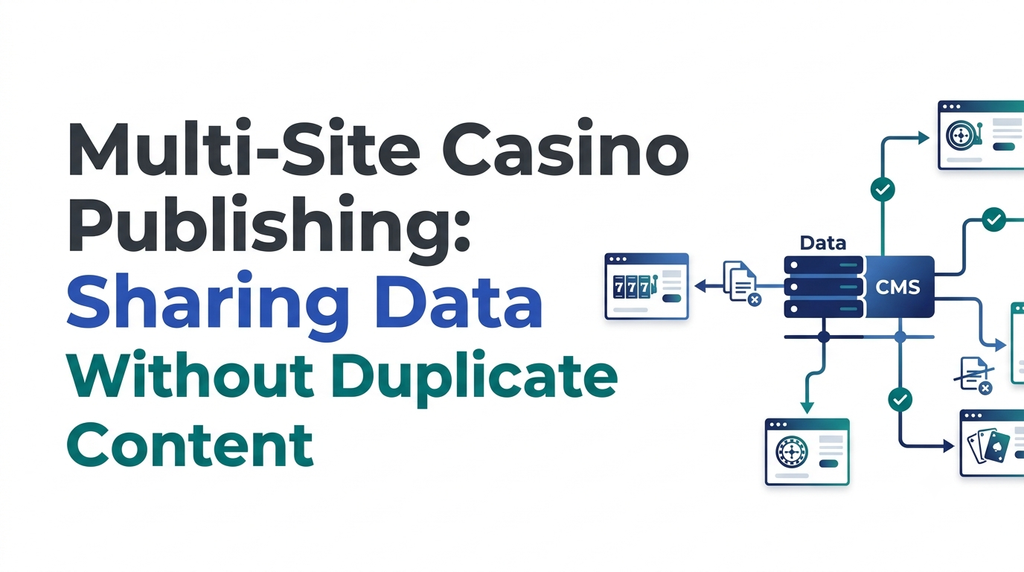
Running a network of iGaming or casino review properties across multiple domains or regional storefronts creates a predictable tension. On one hand, maintaining separate game libraries, payout tables, software provider specs, and licensing details for every site from scratch wastes engineering and editorial hours. On the other hand, piping the exact same text blocks, bonus descriptions, and review paragraphs across ten domains invites search engines to treat those pages as near-duplicates—diluting rankings and wasting crawl budget.
The practical solution is to separate raw structured data from human-facing editorial prose. When sites share underlying facts while presenting distinct, context-specific analysis, you keep operational efficiency without sacrificing search visibility.
Why Shared Facts Turn Into Duplicate Pages
Search engines do not penalize two websites simply because they mention the same slot title, return-to-player (RTP) figure, or software studio. Problems arise when multiple URLs serve nearly identical textual wrappers around those facts, or when thin auto-generated pages repeat boilerplate copy across dozens of operator or game entries.
In multi-site casino publishing, duplication usually creeps in through three channels:
- Identical operator and bonus templates: Publishing the same welcome offer summary, wagering rule explanation, and payment list across regional domains or sister brands.
- Unedited vendor feeds: Importing game descriptions, volatility tags, and feature lists straight from a data provider and displaying them verbatim on every site.
- Near-identical regional variants: Swapping only a city, currency, or local license name inside an otherwise unchanged review or guide.
Designing a Shared Data Layer That Supports Unique Pages
A healthy multi-site setup treats structured records as a single source of truth rather than finished articles. A central database or headless content model can store factual attributes—such as game release dates, reel layouts, RTP ranges, minimum deposit limits, supported payment rails, and verified licensing jurisdictions—while leaving editorial framing to each property.
Once facts live in a structured layer, each site can use them differently based on what its audience actually needs:
| Publishing Layer | What Can Be Shared Safely | What Should Be Written Uniquely Per Site |
| Game & Slot Catalogs | Release year, provider, RTP percentage, paylines, core mechanics | Hands-on gameplay impressions, bankroll pacing notes, comparisons to similar titles |
| Operator Profiles | Accepted payment methods, withdrawal timeframes, active regulatory licenses | Usability observations, support responsiveness, regional availability caveats |
| Jurisdiction & Compliance Guides | Statutory age limits, official regulator names, rule changes | Practical explanation of what local rules mean for players in that specific market |
| Responsible Gambling Resources | Helpline numbers, self-exclusion program names, deposit-limit definitions | Clear, supportive guidance on setting boundaries and recognizing risky play |
Practical Ways to Keep Editorial Content Distinct
Sharing data saves time on maintenance, but unique value still comes from human judgment and local relevance. Teams managing multiple casino sites generally rely on a few disciplined habits to keep pages distinct:
- Anchor each domain to a clear reader angle. One site might focus on game mechanics and math models, while another focuses on regional payment methods or mobile interface details. Even when both cover the same title or operator, the questions answered on the page will naturally differ.
- Use canonical tags only when URLs truly serve the same content. If a page is an exact duplicate or minor parameter variant meant to consolidate ranking signals, a
rel="canonical"tag helps. Do not use canonicals as a shortcut to hide thin, unedited pages that should either be improved or noindexed. - Audit thin programmatic pages regularly. Automated game or bonus pages often fail when they have almost no unique commentary beyond a few swapped numbers. Either enrich them with genuine analysis or keep them out of search indexes until they offer real utility.
- Verify local legality and age rules before publishing. Gambling laws, advertising restrictions, and age thresholds vary sharply by country, state, or province. Never copy legal or availability notes across regions without confirming current rules for the target jurisdiction.
Responsible Publishing Boundaries
Educational coverage of iGaming platforms, game mechanics, and publishing architecture should stay grounded in accurate facts and clear boundaries. Casino games carry inherent risk and are never a reliable way to make money, and access to gambling content or real-money platforms must respect applicable legal age requirements and local laws. Including clear self-exclusion, deposit limit, and support resources helps readers make informed, safe choices.
Frequently Asked Questions
Can two sites in the same network publish reviews of the same slot or casino?
Yes, provided each page offers independent analysis, distinct structure, and genuinely helpful context rather than reworded boilerplate or copied descriptions.
Does sharing a database automatically cause a duplicate content penalty?
No. Sharing structured data—like RTP figures, game rules, or licensing facts—is standard practice. Duplicate content issues happen when the rendered pages themselves look nearly identical or add little original value.
When should I use noindex instead of writing more unique copy?
Use noindex on utility views, filter combinations, or low-value pages that do not serve standalone search intent, rather than padding thin pages with repetitive filler text.
Why is regional accuracy so important in multi-site casino publishing?
Licensing status, payment availability, promotional rules, and legal age limits depend on jurisdiction. Copy-pasting regional details across sites often introduces inaccurate or unlawful claims for a given market.
Conclusion
Managing multiple casino websites works best when structured data stays centralized while editorial storytelling remains tailored to each domain. Sharing verified facts like RTP figures, payment rails, and licensing records eliminates repetitive maintenance without forcing identical pages across your network. When every site pairs that shared foundation with original analysis, local compliance checks, and clear responsible gambling guidance, readers get genuinely useful answers and search engines recognize distinct value on every URL. Treat your shared database as a factual backbone rather than a finished article, and your network can scale efficiently without sacrificing search visibility or editorial trust.
