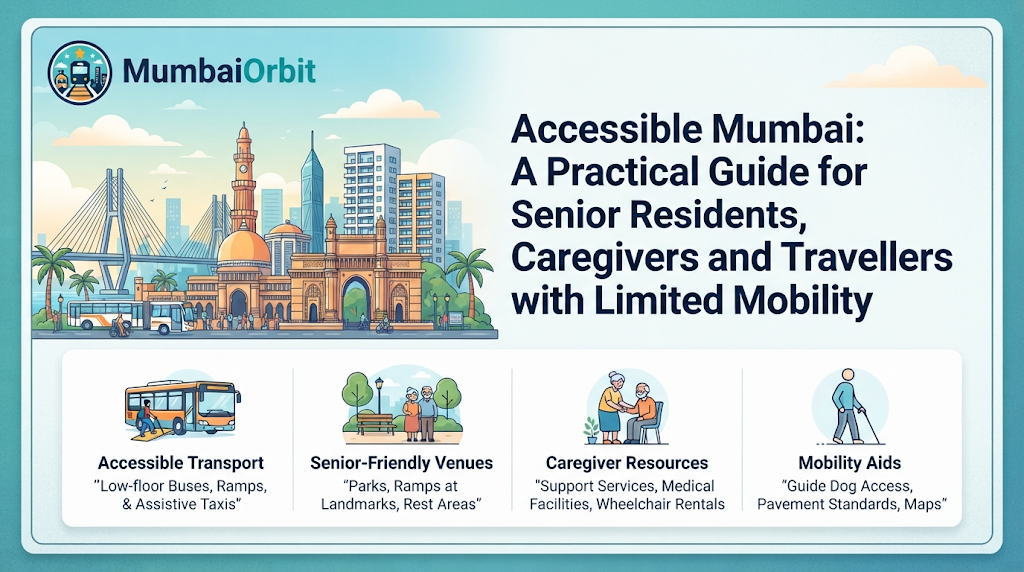
Most Mumbai guides assume the reader can climb stairs, stand in a crowd and walk long distances. Many people cannot. Older residents, caregivers and travellers with limited mobility need a different plan, one that puts access and rest ahead of speed.
This guide covers housing, transport, food, shopping, sightseeing and local support from that point of view. It quotes no fares, timings or prices, because these change. Facilities such as lifts, ramps and seating also change, so each one should be confirmed with the official source or the building concerned before you rely on it.
Choosing a Home That Works Every Day
For an older household, the home matters more than any other decision. A flat that is slightly more expensive but easy to enter and leave is often the better value.
Many families search for the best areas to live in Mumbai for senior members. No single area suits every household, because health needs, budget and family location all differ. A useful comparison covers:
| Factor | What to check |
|---|---|
| Building access | Working lifts, ramps, and the number of steps at the entrance |
| Medical support | Distance to a clinic, pharmacy and hospital |
| Surroundings | Even footpaths, nearby seating and quiet streets |
| Daily needs | Grocery shop, vegetable seller and pharmacy within easy reach |
| Society rules | Policies on tenants, visitors, caregivers and power backup |
| Transport | Distance to a bus stop, railway station or Metro station |
Visit the area at two different times, such as a busy morning and a quiet evening. Walk the route to the nearest clinic yourself. Read the rental agreement fully and ask what the maintenance charge includes.
Moving Around the City With Care
The Suburban Railway
The suburban railway is the main way many people travel, but it is demanding. A sound Mumbai local train guide begins with its structure. The network runs on three main corridors, commonly called the Western, Central and Harbour lines. Stopping patterns differ, and many stations involve stairs or bridges. Peak hours are very crowded.
For older travellers, the safest approach is to avoid the morning and evening rush, travel with a companion, allow extra time and confirm station facilities with the official railway source before the trip.
Metro Connectivity
The Metro can be gentler on some routes. A useful Mumbai Metro Line 3 guide should confirm which stations are open, where passengers can change to a railway station or another line, what step-free access and lifts each station offers, and the current timings and fares. Services have opened in phases, so the official transport source should settle every detail.
| Mode | Suits older travellers when | Main limitation |
|---|---|---|
| Suburban railway | Travelling off-peak with a companion | Stairs, crowding and long platforms |
| Metro | Stations on the route have step-free access | Coverage varies by area |
| Taxi or app cab | Door-to-door comfort is the priority | Higher cost and traffic delays |
| Bus | Short local trips on familiar routes | Boarding height and crowding |
Eating Well and Eating Safely
Mumbai’s food culture is a pleasure at any age, but digestion and health conditions call for care. People curious about the best street food in Mumbai will meet these favourites:
- Vada pav: a spiced potato fritter in a soft roll
- Pav bhaji: a buttery vegetable mash served with bread
- Bhel puri and sev puri: crisp, tangy snacks
- Misal pav: a spicy sprout curry with bread
- Bombay sandwich: a vegetable sandwich with chutney
Preferences vary, so treat any published ranking as a starting point. Choose busy stalls with freshly cooked food, ask for mild spice, avoid raw or cold items if the stomach is sensitive, and carry safe drinking water. Anyone on a medical diet should check with their doctor before trying new dishes.
Shopping Without Strain
The shopping markets in Mumbai can be crowded and uneven underfoot. Some specialise in clothing, others in gifts and handicrafts, household goods or electronics. For older shoppers, planning matters:
- Go early on a weekday when crowds are thin.
- Decide what you need in advance and make a short list.
- Choose fixed-price shops where possible, since they are quieter and need less negotiation.
- Confirm opening hours and weekly closing days before travelling.
- Ask a family member or helper to carry bags.
Gentle Sightseeing for Visitors
Many leading places to visit in Mumbai are clustered in the historic south, including the Gateway of India, Marine Drive and the heritage railway terminus. Their closeness keeps travel short, which helps visitors who tire easily. Seafront promenades and parks also offer places to sit. Confirm opening days, entry rules and access arrangements before each visit.
A Mumbai 3 day itinerary for a mobility-conscious traveller should be slow and area-based:
- Day one: one district only, with long rest stops
- Day two: a short market visit and an unhurried meal
- Day three: a quiet morning by the sea or in a park, then a free afternoon
Short Breaks Beyond the City
Popular weekend getaways from Mumbai include Lonavala for hill scenery, Matheran as a quiet hill station, Alibaug for beaches and Karjat for nature. For older travellers, access decides the choice. Check how much walking, climbing or uneven ground each destination involves, and whether the final stretch of travel suits your needs. Season also matters, because a place pleasant in the rains can be wet and crowded. Confirm transport and timings close to the travel date.
Caregivers and Independent Work
Some caregivers and retirees also look for flexible income. For those considering how to start a small business in Mumbai, a measured approach works: identify a genuine local need, test the idea with a few customers, choose a low-cost base such as a home setup or coworking desk, and prepare a simple plan of costs and prices. Registration and licence requirements depend on the business type and current rules, so confirm them with official sources or a qualified professional.
Local Experience When Guides Run Out
No guide can answer every personal situation. Whether a particular station is manageable for someone with a walking stick, whether a building is welcoming to elderly tenants, or which neighbourhood is calm and well served are best answered by people who live there.
That is the role of a Mumbai community forum. MumbaiOrbit is a Mumbai-focused online community and information platform that combines a local discussion forum with a travel and lifestyle blog. Its purpose is to help residents, newcomers and visitors share practical knowledge, ask questions and exchange recommendations about everyday life in Mumbai and surrounding areas of Maharashtra.
Its discussion categories suit the themes of this guide:
- Ask Mumbai for general questions
- Trains & Transport for commuting and station access
- Housing for rentals, neighbourhoods and society matters
- Khau Galli for food
- Maharashtra Matters for regional topics
Forum discussion offers lived experience. For fares, timings, accessibility details and regulations, rely on the official source.
Conclusion
Mumbai can be comfortable at any age when plans put access first. Choose a home with reliable lifts and nearby medical support, travel outside peak hours and confirm station facilities before each journey. Keep sightseeing slow and grouped by area, eat at busy stalls with care, and choose weekend trips that match your mobility and the season. Combine official information with the experience of local residents, and the city becomes far easier to enjoy.
