Introduction
An attendee often makes a decision about an event within a few minutes, while an organizer may have spent weeks preparing it. The two sides move at different speeds, yet they depend on the same thing: a clear and complete description of what is happening, where and how to take part. When that description is hard to find or hard to understand, interested people drift away and organizers lose the chance to welcome them.
MyEventNow is an online platform designed to close that gap. It combines event discovery, ticket booking and organizer tools in one place. This article goes through its main parts, the types of events it covers and the practical ways different people can use it.
Getting to Know MyEventNow and Its Purpose
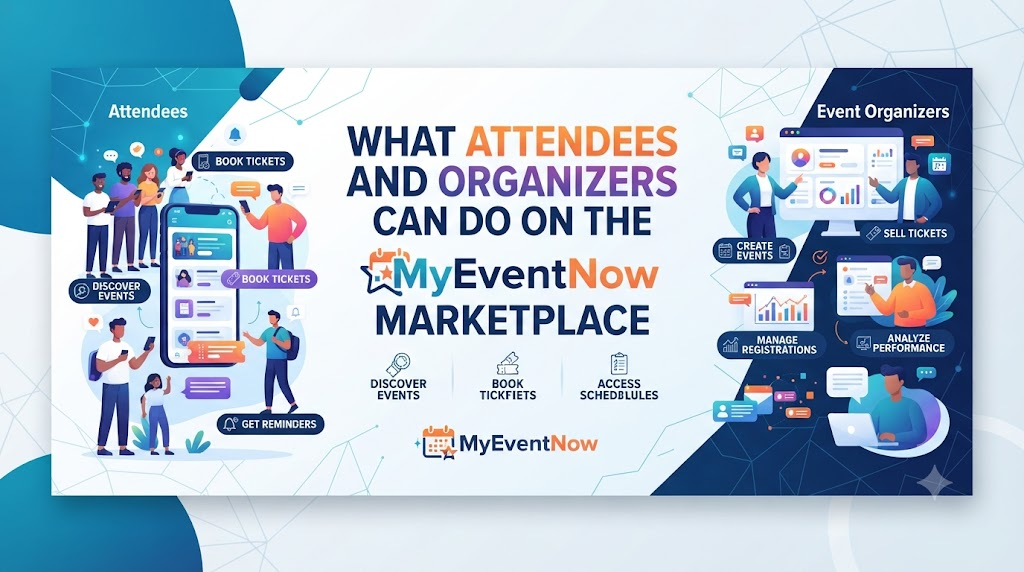
MyEventNow is a marketplace for finding events, booking tickets and managing events. It serves event organizers, businesses, communities and attendees together, so a single listing can serve everyone involved.
Visitors can look through local and upcoming events, read the information that organizers provide and then register or buy a ticket. The categories include concerts, comedy shows, festivals, workshops, exhibitions, conferences, seminars, webinars, theatre productions and community gatherings.
Organizers get tools for the other half of the job. They can create listings, configure ticket options, publish schedules, handle registrations, organize attendee information, monitor bookings and review performance. Centralized dashboards keep these tasks together.
The two functions feed each other. The listing that an organizer writes is what an attendee reads, and the registration an attendee completes is what an organizer later reviews.
Reasons Event Search and Booking Should Be Straightforward
People rarely lack interest in events. They more often lack the time to chase down details. A well-organized marketplace saves that time in a number of familiar situations.
Someone who has just moved to a city may want to see what its venues offer. A parent might look for a weekend activity that suits the whole family. A group of colleagues may be trying to choose between a music night and a stage show. A learner could be searching for a workshop that fits a free Saturday. If each of these people can read, compare and reserve in one place, the effort drops considerably.
Online event ticket booking makes this practical, because reading about an event and securing a place can happen back to back. There is no need to remember details and then search again elsewhere.
Organizers need the same simplicity from their end. A clear listing allows them to introduce an event properly, answer common questions in advance and invite the right audience to take part.
Services and Features on MyEventNow in Detail
The sections below explain each major function and how it might be used.
Exploring Activities Close to Home
Searches for Events Near Me usually reflect a modest goal, such as finding a pleasant way to spend an evening without traveling far. MyEventNow lets visitors browse concerts, workshops, festivals, theatre performances, exhibitions and community gatherings.
The browsing experience depends on the quality of each page. A visitor needs the place, the schedule and a straightforward description. With these in front of them, they can decide whether an event is realistic for their day. Category-based browsing helps people who know the mood they are after but not the exact event. The platform description does not mention specific search filters or location-detection tools, so none are claimed here.
Looking Across Cities for Future Events
Some plans start well in advance. Festivals, conferences and popular performances reward early attention. On MyEventNow, visitors can look at Upcoming Events in India across cities such as Mumbai, Delhi, Bengaluru, Hyderabad, Pune, Chennai, Kolkata and Ahmedabad.
This helps different people in different ways. Residents see what is planned in their own city. Families can arrange outings early. Students can spot sessions near campus. Business travelers can check whether anything suitable falls within their trip dates.
Listings come from organizers, so the range of events varies by place and time, and no category is promised in every city. Checking the platform directly gives the current picture.
Finding and Booking Live Music Events
Live music takes many forms, including multi-act festivals, cultural performances and shows by a single artist. People searching for Concert Tickets Online can use MyEventNow to see which music events are listed and read about them.
It helps to treat the event page as a short briefing. The venue indicates the journey. The schedule indicates the arrival time. The ticket options indicate what you may select. Reading these before paying avoids surprises and keeps plans realistic.
For someone attending their first live performance, such a page also answers the basic questions of what to expect and how to take part.
Selecting Stand-Up, Theatre and Other Shows
Stage entertainment appeals to a different mood. Stand-up, theatre productions and similar live experiences are available through the platform, and visitors looking for Comedy Show Tickets can browse performances there.
A few plain questions can make the choice easier. What style of show is it? Is the date convenient for everyone attending? Can the venue be reached comfortably? Does the description explain the performance well? Groups planning together tend to reach a decision faster when they run through these points.
From Browsing to Booking: The Attendee Path
For attendees, the sequence is easy to follow. They find an event, review its details, choose a ticket or registration option and complete the booking as the platform provides.
Each stage works best when nothing is concealed. Ticket information should be readable, and event details should be there before anyone commits. Since discovery and booking sit in the same marketplace, the attendee never needs to find an event in one location and then look for a separate way to book it.
This article does not discuss payment methods, refund terms, digital wallets, entry procedures or cancellation rules. Those details should be confirmed on the platform itself.
Setting Up Listings and Ticket Choices for an Audience
For people who host events, MyEventNow serves as an Event Ticketing Platform. Organizers can prepare a professional listing, add relevant event information, configure ticket options, publish the schedule and share the listing to promote the event.
The range of users is wide. Independent organizers can present small programs. Businesses can list launches and customer sessions. Educational institutions can announce talks and exhibitions. Agencies can handle listings for clients, and community groups can invite neighbors to local activities.
A shareable listing gives organizers one page to circulate. The response will depend on the event and on how actively the organizer spreads the word.
Organizer Dashboards and Day-to-Day Event Control
Once an event is public, the practical work continues. Registrations need to be followed, sales watched, attendee details kept in order and schedules checked. Event Management Software exists for this stage.
According to the platform, organizers can coordinate registrations, manage ticket sales, organize attendee information, maintain schedules and review performance reports. Centralized dashboards hold this information together.
The main advantage is that organizers do not have to run each task in a separate place. One view of the event shows where things stand. Automatic processes and advanced reporting are not assumed beyond what the description states.
Collecting Sign-Ups for Learning and Business Events
Many events are held to teach, train or bring professionals together. An Event Registration Platform can support conferences, seminars, workshops, training programs, webinars, business events and networking meetups.
Registrations provide organizers with a list of participants and the details needed to prepare, such as room size, materials and timing.
Consider a few uses. A university department might gather sign-ups for a guest talk. A company might register employees for an internal training day. A professional trainer might keep track of who has joined a short course. In every case, a single organized list is easier to work with than many separate replies.
Publishing an Event So Interested People Can See It
Some organizers have small teams and little time. For them, the chance to List Your Event Online offers a direct way to make plans public. Independent organizers, agencies, businesses, educational institutions and community groups can all use it.
A listing earns trust when it is accurate. It should state what the event is, when and where it takes place and how tickets work. Gaps in this information create doubt.
Shareable listings let organizers introduce events to interested audiences, but a platform cannot promise a certain reach or number of registrations. A listing is best seen as one piece of the organizer’s wider outreach.
Ticket Details, Bookings and Availability Management
Organizers planning to Sell Event Tickets Online need to share ticket details plainly and watch how bookings develop. MyEventNow lets them publish ticket information, manage availability, monitor bookings and promote events through shareable listings.
Upkeep matters. If a start time shifts or a ticket option changes, the listing should be revised soon after. Out-of-date information creates confusion for attendees and more messages for organizers. Fees, payout schedules and ticket limits are outside the scope of this article and should be confirmed with the platform.
Getting Started on MyEventNow: Attendee and Organizer Steps
If you are attending
- Visit the platform and browse the events on offer.
- Search using a location or category.
- Read the description, schedule and any other details provided.
- Select the ticket or registration option that suits you.
- Complete the booking or registration as the platform guides.
If you are organizing
Gather your information first: a description, a date, a venue and ticket details. Create the listing, configure the ticket options and publish the event. Then use the management tools to follow registrations and bookings. Screen names and buttons can differ, so rely on what the platform shows.
Errors That Make Events Harder to Enjoy or Run
Many problems begin with haste. Attendees who book without checking the date and venue may find that the event is not workable for them. Those who skip the description can miss format or timing details. Choosing an event type that does not match their taste, simply because it appeared first, often leaves them disappointed.
Organizers meet different hazards. A listing with details missing leaves readers guessing. Vague ticket descriptions raise questions that could have been avoided. A schedule that is not updated after a change causes confusion on the day, and registration records that go unchecked make preparation harder.
Careful reading on one side and careful writing on the other remove most of these problems.
A Made-Up Scenario: A School Science Exhibition
Imagine a school that wants to hold its yearly science exhibition for students, parents and neighbors. The organizing team writes a short description, confirms the date and the school hall, and plans the opening hours. They create a listing with these details, set up a ticket option for visitors and publish the event. The listing link is shared with parent groups and local communities.
A parent looking for a weekend outing with children comes across the exhibition. They read about the displays, check that the hours fit their day and see that the school is not far away. Everything looks suitable, so they choose a ticket option and complete the booking.
At the school, the team watches the bookings arrive. A teacher reviews the records, notes how many visitors have registered and updates the listing when the opening time changes. By the day of the exhibition, the team has a fair idea of how many guests to expect.
Reader Questions About MyEventNow
What problem does MyEventNow try to solve?
It reduces the effort of finding events, booking places and managing event details by placing them in one marketplace.
Can I explore events without a specific one in mind?
Yes. Visitors can browse by category and read through the information provided for each event.
Which cities does the platform mention?
Mumbai, Delhi, Bengaluru, Hyderabad, Pune, Chennai, Kolkata and Ahmedabad.
What can organizers keep track of after publishing?
Registrations, ticket sales, attendee information, schedules and performance reports, all through centralized dashboards.
Can theatre productions and exhibitions be found?
Yes. Both are among the event types the platform covers.
Is MyEventNow suited to community groups?
Yes. Community groups, along with independent organizers, businesses, agencies and educational institutions, can publish events.
How should organizers check how an event is going?
By monitoring bookings and reviewing the performance reports available to them.
Should I compare events before booking?
Yes. Reading each event’s details side by side helps you choose the one that fits your plans.
Closing Perspective
MyEventNow gives people a single marketplace in which to look for concerts, comedy shows, workshops, festivals and community programs, read what each involves and book a place. Those who host events can use it to publish listings, configure tickets and follow registrations, bookings and schedules from a central set of dashboards.
What ties both sides together is the shared listing. Information entered by the person planning becomes the information used by the person deciding, and the quality of one shapes the experience of the other. For anyone who attends or organizes events regularly, that connection is the platform’s most practical feature.
