Introduction
Imagine walking into a massive land-based resort with thousands of slot machines and dozens of table games. If the management handed every single visitor the exact same welcome brochure, offered identical free meals, or pushed the same promotions, most people would ignore them. A casual player who enjoys a five-dollar spin on a weekend would not care about high-stakes baccarat tournaments, and a serious VIP would feel insulted by a low-value free drink voucher.
The same rule applies tenfold in the online gaming world. Digital platforms handle thousands of active users at any given moment. These players have vastly different budgets, favorite game types, risk tolerances, and playing frequencies.
To handle this diversity, operators use casino segmentation strategies. These methods help platforms understand who their users are, what they want, and how to keep them engaged safely and profitably. Without proper segmentation, marketing becomes a guessing game that wastes money and frustrates users with irrelevant offers.
What Is Casino Segmentation?
Casino segmentation is the process of dividing a large group of players into smaller, distinct subgroups based on shared characteristics.
Think of it like a grocery store organizing its aisles. Instead of putting all items in a random pile, the store separates dairy, produce, and bakery goods so shoppers can find what they want. In the digital gaming industry, segmentation groups players by how they behave on the platform.
Why It Matters
- Personalization: Players receive offers and game recommendations that match their actual interests.
- Efficiency: Marketing budgets are spent targeting the right users rather than broadcasting generic ads.
- Player Protection: Operators can spot risky financial behavior early and step in to help.
- Profitability: High-value customers receive the attention they expect, keeping them loyal to the platform.
Example
Player A logs in every Friday night, deposits twenty dollars, and plays low-stakes online slots for an hour. Player B deposits thousands of dollars weekly and plays high-limit live blackjack. Segmentation ensures Player A receives free spins on new slot releases, while Player B gets invited to an exclusive VIP table event with a dedicated account manager.
How Casino Segmentation Works
Segmentation is driven by data analytics and player tracking software. Every time a user interacts with a platform—whether they log in, spin a reel, chat with support, or request a withdrawal—data is collected.
The Data Collection Process
- Behavioral Tracking: The system records which games a user plays, how long they stay, what time of day they log in, and how much they wager.
- Financial Tracking: The platform monitors deposit sizes, withdrawal frequencies, preferred payment methods, and bonus usage.
- Engagement Metrics: Operators look at how often a player opens promotional emails, clicks on links, or responds to customer support.
Once the data is collected, algorithms and analysts group players into specific categories. These groups are dynamic, meaning a player can move from one segment to another as their habits change.
Core Types of Casino Segmentation Strategies
Operators rely on several distinct frameworks to categorize their player base. Each strategy looks at a different piece of the puzzle.
1. Demographic Segmentation
This is the simplest form of grouping. It looks at basic background details.
- What it includes: Age, gender, location, and preferred language.
- Why it matters: Local laws dictate what games can be offered in specific regions. Furthermore, promotional language and design styles may appeal differently across age groups.
- Limitation: Demographics do not tell you how much money a player will spend or how they play.
2. Behavioral Segmentation
This is the most crucial strategy for online gaming platforms. It groups users based on their actual actions on the site.
- Game Preference: Slots players vs. table game enthusiasts vs. sports bettors.
- Channel Usage: Mobile app users vs. desktop web browser users.
- Session Length: Short, casual bursts of play vs. long, marathon gaming sessions.
- Bonus Affinity: Players who only deposit when a bonus is active vs. regular players who ignore promotions entirely.
3. Value-Based Segmentation (RFM Model)
Value-based segmentation often uses the RFM framework, which stands for Recency, Frequency, and Monetary value.
- Recency: How recently did the player log in and play?
- Frequency: How often do they return to the platform?
- Monetary Value: How much net revenue or total handle do they generate?
This model helps operators identify their most profitable customers (VIPs) as well as players who are drifting away and need a re-engagement campaign.
4. Risk-Based Segmentation
Responsible gambling and regulatory compliance require operators to monitor risk levels.
- What it includes: Sudden increases in deposit sizes, chasing losses, frequent failed transactions, or self-exclusion history.
- Why it matters: Allows compliance teams to intervene early to prevent problem gambling and ensure the platform adheres to anti-money laundering (AML) laws.
Practical Examples in the Real World
To see how these strategies work in practice, let us look at three fictional user profiles on an online gaming site.
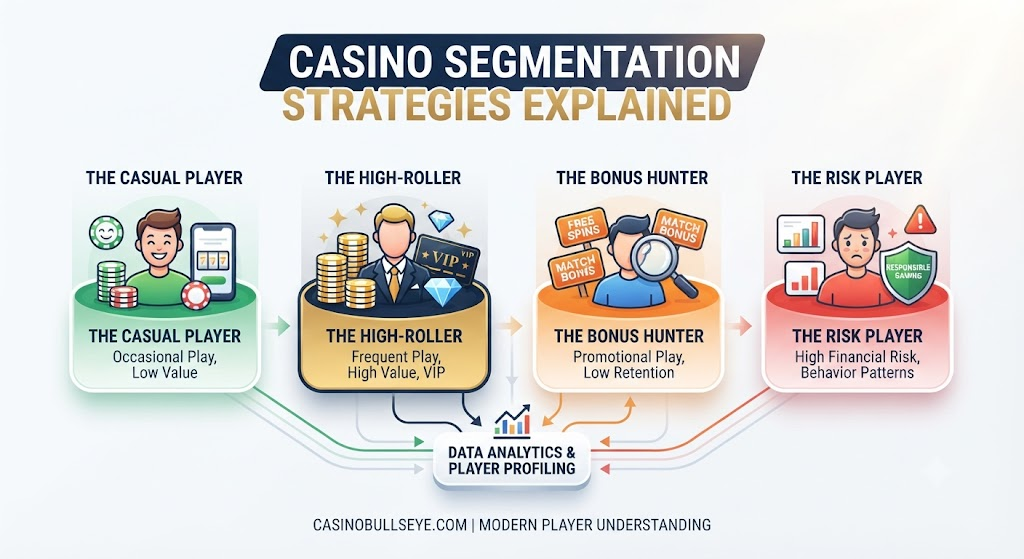
Profile 1: The Casual Weekend Spinner
- Behavior: Logs in on Friday afternoons, deposits $30, plays low-volatility slot games, and leaves after an hour regardless of winning or losing. Does not use bonuses.
- Segmentation Result: Low-value, casual entertainment segment.
- Operator Strategy: Send a weekly newsletter highlighting new slot releases with low minimum bets. Avoid aggressive deposit match bonuses since they do not respond to them.
Profile 2: The Bonus Hunter
- Behavior: Only signs up or deposits when a large deposit match or free-spin promotion is active. Plays through the requirement and rarely deposits with their own cash afterward.
- Segmentation Result: Promotional-sensitive, low long-term value segment.
- Operator Strategy: Restrict access to high-value recurring bonuses to protect profit margins, or offer smaller, loyalty-based rewards that encourage organic deposits.
Profile 3: The VIP Table Game Player
- Behavior: Deposits large sums multiple times a week, plays high-limit roulette and blackjack, and communicates frequently with support.
- Segmentation Result: High-value VIP segment.
- Operator Strategy: Assign a personal account manager, offer fast-track withdrawals, provide customized cashback offers, and invite them to special digital tournaments.
Common Mistakes in Casino Segmentation
When operators implement segmentation poorly, it can lead to wasted effort or a damaged user experience.
| Common Mistake | Why It Happens | Consequence | What to Do Instead |
| Over-Segmentation | Creating too many tiny micro-segments. | Campaigns become too complex to manage and analyze effectively. | Focus on 4 to 6 broad, actionable player groups before niching down. |
| Static Grouping | Never updating player segments after initial signup. | Players outgrow their category (e.g., a casual player becomes a VIP). | Use automated algorithms that update player segments in real time. |
| Ignoring Risk Signals | Focusing purely on monetary value while ignoring problem gambling signs. | Regulatory fines and harm to vulnerable players. | Integrate responsible gambling metrics directly into the segmentation model. |
| Irrelevant Messaging | Sending generic promotions to targeted segments. | High unsubscribe rates and player annoyance. | Match the offer directly to the behavioral traits of that specific group. |
Risks and Limitations
While segmentation is a powerful tool, it comes with specific challenges that operators must manage carefully.
1. Data Privacy and Security
To segment players effectively, platforms must collect and store detailed behavioral data. If security measures are weak, this data can be vulnerable to breaches. Operators must comply with strict privacy regulations like GDPR to protect user information.
2. Algorithmic Bias
Segmentation models rely on historical data. If an algorithm is poorly designed, it might misjudge a player’s intent. For example, a player who suddenly deposits a large sum to try a new game might be flagged incorrectly as a high-risk problem gambler or miscategorized as a permanent high-roller.
3. High Implementation Costs
Building and maintaining advanced data analytics pipelines requires skilled data scientists, robust software architecture, and continuous monitoring. Smaller operators may struggle to implement complex real-time segmentation models.
Decision-Making Framework for Operators
When building or updating a segmentation strategy, operators should follow a structured approach:
- Define the Goal: Decide what you want to achieve (e.g., reduce churn, improve VIP retention, or enhance responsible gambling monitoring).
- Audit Available Data: Check what data your platform currently collects and ensure it is clean and reliable.
- Choose Core Variables: Start simple by grouping users based on deposit frequency and preferred game types.
- Test Campaigns: Run small-scale targeted promotions to see how different segments respond.
- Automate and Refine: Use software tools to update segments dynamically and adjust strategies based on performance metrics.
Key Terms
- Churn Rate: The percentage of players who stop using the casino platform over a given period.
- Customer Lifetime Value (LTV): An estimate of the total net profit a casino can expect from a single player throughout their entire relationship with the site.
- RFM Model: A marketing analysis method that groups users based on Recency, Frequency, and Monetary value.
- High-Roller: A player who wagers large amounts of money consistently.
- Dynamic Segmentation: A system where player groups automatically update in real time as user behavior changes.
- Responsible Gambling: Policies and tools put in place to ensure safe gaming and protect players from addiction.
- Conversion Rate: The percentage of players who take a desired action, such as accepting an offer or making a deposit.
- Behavioral Analytics: The study of how users interact with a digital platform to understand their habits and preferences.
FAQs
What is casino segmentation?
It is the practice of dividing a casino’s player base into distinct groups based on their behavior, spending habits, and gaming preferences so operators can tailor experiences and offers.
Why do online casinos segment their players?
Segmentation helps platforms improve player retention, personalize marketing campaigns, maximize revenue from high-value users, and spot problem gambling behaviors early.
What is the RFM model in gaming?
RFM stands for Recency, Frequency, and Monetary value. It is a formula used to evaluate and score players based on how recently they played, how often they return, and how much money they spend.
How do casinos identify high-rollers?
Casinos track financial metrics such as average deposit size, total wagering volume, and frequency of high-limit game sessions to identify and categorize VIP players.
Can player segments change over time?
Yes. Modern online platforms use dynamic segmentation, meaning a player’s category updates automatically as their gaming habits, spending, or activity levels change.
Is casino segmentation safe for player privacy?
Yes, provided that operators comply with data protection laws like GDPR. Data collection must be secure, transparent, and used strictly for platform operation and compliance.
How does segmentation help with responsible gambling?
It allows operators to monitor sudden changes in behavior—such as erratic deposit patterns or chasing losses—so support teams can intervene and offer assistance.
Conclusion
Casino segmentation is much more than a marketing trick; it is the foundation of modern digital gaming operations. By moving away from a one-size-fits-all approach, operators can deliver relevant experiences to casual gamers while properly rewarding high-value users. At the same time, careful behavioral tracking helps protect vulnerable players and keeps platforms compliant with industry regulations. Understanding how these strategies work provides a clear window into how digital entertainment platforms operate behind the scenes.
