Introduction
Running a modern online casino is no longer just about offering a few slot machines and a deck of cards. Digital gaming platforms host thousands of concurrent users, generating massive streams of data every single second. Without the right tools, this data is just a messy digital footprint.
The challenge for platform operators is making sense of this information without ruining the fun. If a platform relies only on guesswork, it might push games players hate or fail to spot a security threat until it is too late.
This article explains how player analytics help casino platforms work better, feel more personal, and stay secure. You will learn how data moves behind the scenes, why it matters for both players and operators, and what can go wrong when analytics are handled poorly.
What Is Player Analytics?
Player analytics refers to the process of gathering, cleaning, and studying data generated by users while they interact with a casino platform.
- Professional term: Player analytics
- Simple meaning: Tracking how people play games on a website or app so the platform can learn what works and what does not.
- Why it matters: It turns raw numbers into useful decisions, helping platforms improve safety, game variety, and website speed.
- Example: If a platform notices that hundreds of players leave a specific slot game within the first minute, analytics flag that the game might be loading too slowly or failing to load at all.
How Player Analytics Work
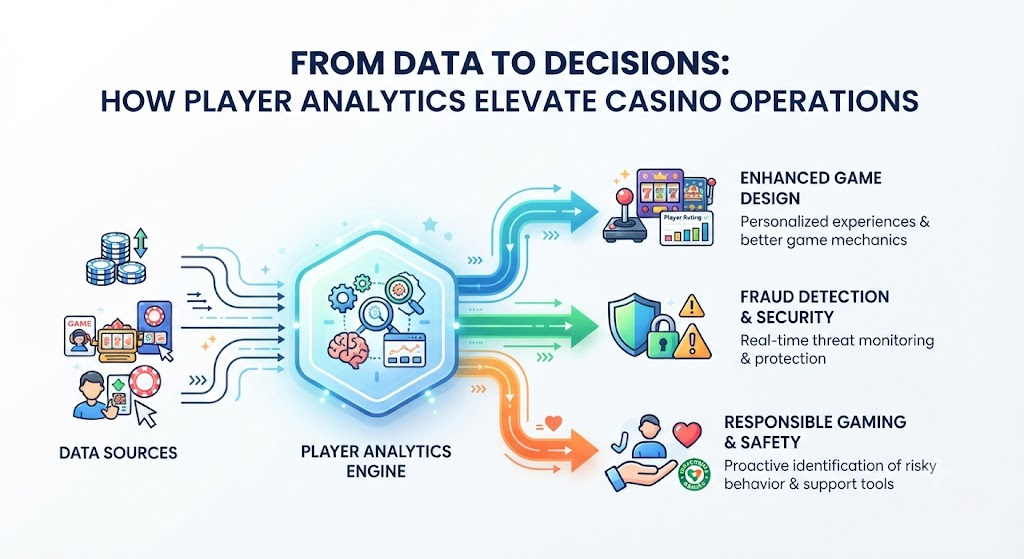
A casino platform cannot improve if it does not know what is happening in real time. The analytics process generally follows a continuous loop of collection, processing, and action.
1. Data Collection
Every click, tap, deposit, win, loss, and navigation choice is logged. This includes timestamps, device types, geographic locations, and session durations.
2. Data Processing and Aggregation
Raw data is messy. Algorithms clean the information and group it together. Instead of looking at one single user’s every move, the system groups users with similar habits together (e.g., casual weekend slot players versus high-stakes table game enthusiasts).
3. Behavioral Modeling
Machine learning models analyze patterns. They predict what a player might want to do next, or they flag unusual behavior that looks like account theft or bonus abuse.
4. Automated Action
Once the system spots a pattern, it triggers an action. This could mean showing a personalized game recommendation on the homepage, sending a deposit bonus, or locking an account if fraudulent activity is detected.
Why Player Analytics Matter for Modern Platforms
Without analytics, a casino platform is flying blind. Here is why data collection is essential for running a sustainable digital operation:
- Personalization: Instead of treating every visitor the same, platforms tailor the lobby to show games the user actually likes.
- Technical Performance: Analytics reveal server bottlenecks, crashed games, and payment gateway failures instantly.
- Fairness and Compliance: Regulators require platforms to monitor for suspicious activity, money laundering, and underage gambling. Analytics provide the audit trail.
- Responsible Gambling: Data spots dangerous patterns—like chasing losses or sudden spikes in spending—allowing platforms to step in and offer help.
Key Areas Improved by Player Analytics
Game Design and Lobby Layout
Developers use analytics to see which themes, volatility levels, and mechanics hold a player’s attention. If data shows that Megaways-style slots are losing popularity while crash games are rising, the platform can adjust its partnership strategy with software providers and feature trending games prominently.
Fraud Detection and Security
Online platforms face constant threats from bots, multi-accounting, and bonus abuse. Analytics monitor behavioral biometrics—such as mouse movement speeds or typing patterns—to confirm that a human account holder is really the one playing, stopping unauthorized access before funds are stolen.
Targeted Promotions and Bonuses
Instead of giving expensive blanket bonuses to everyone (which attracts bonus hunters who leave immediately), analytics help platforms offer targeted rewards based on individual player value and preferences.
Practical Examples
Example 1: The Casual Weekend Player
- The Situation: Sarah logs in every Friday night for 30 minutes to play classic slot games.
- The Analytics Impact: The platform recognizes her habits. Instead of flooding her screen with complex poker tournaments, the homepage highlights simple, low-stakes slots and a small weekend free-spin bonus. Sarah enjoys a smooth experience without having to dig through menus.
Example 2: Spotting Problem Gambling Behavior
- The Situation: Mark usually deposits small amounts and plays casually. Suddenly, he starts depositing rapidly, increasing his bet sizes after losses, and playing through the night.
- The Analytics Impact: The system’s risk models flag this sudden shift in behavior. The platform triggers an automated pop-up offering cooling-off options and links to support resources, protecting Mark from severe financial harm.
Common Mistakes in Player Analytics
| What People Do | Why They Do It | Why It Causes Problems | What They Should Do Instead |
| Collecting everything forever | Fear of missing out on valuable data points. | Creates massive database bloat, privacy risks, and compliance violations. | Collect only anonymized data necessary for specific operational goals. |
| Ignoring user privacy | Wanting deeper profile insights for marketing. | Destroys player trust and violates privacy laws like GDPR. | Use transparent consent banners and stick to strict data minimization principles. |
| Relying solely on automated alerts | Saving time on manual reviews. | Generates false positives that frustrate legitimate players. | Combine machine learning alerts with human compliance review teams. |
Risks and Limitations
While player analytics bring massive advantages, they also introduce serious challenges that operators must manage carefully.
- Privacy Violations: Tracking users too closely can feel invasive. If data leaks, player trust is destroyed permanently.
- Algorithmic Bias: If historical data is skewed, automated systems might misidentify normal high-stakes players as problem gamblers or fraudsters.
- Regulatory Compliance: Different jurisdictions have strict laws regarding data storage, cross-border transfers, and player tracking. Failing to comply can result in heavy fines or loss of licensing.
Decision-Making Framework for Platform Operators
If you are evaluating or building an analytics pipeline for a casino platform, follow these steps:
- Define the Goal: Are you trying to improve game loading speeds, stop bonus abuse, or enhance responsible gambling tools? Focus on one priority at a time.
- Audit Data Sources: Check what data your platform currently collects and ensure it complies with local privacy regulations.
- Choose the Right Stack: Invest in scalable data warehousing and real-time processing tools that can handle traffic spikes during peak gaming hours.
- Implement Privacy by Design: Anonymize sensitive user data early in the pipeline to protect player identities.
- Monitor and Refine: Regularly test your analytical models for false positives and operational drift.
Key Terms
- Behavioral Biometrics: The study of unique human physical patterns, such as how someone types on a keyboard or moves a mouse, used to verify identity.
- Cohort Analysis: Grouping players based on shared characteristics or signup dates to track their behavior over time.
- Data Minimization: The privacy principle of collecting only the data that is strictly necessary for a specific business purpose.
- Churn Rate: The percentage of players who stop using the platform over a given time period.
- Session Duration: The total amount of time a player spends logged into the platform during a single visit.
- Volatility: A mathematical measure of how often and how much a casino game pays out.
Frequently Asked Questions
Does player analytics mean casinos are rigging games?
No. Player analytics study how users interact with the platform, navigate menus, and choose games. They do not change the underlying mathematical odds or Random Number Generators (RNG) of certified casino games.
How do analytics protect player security?
Analytics monitor login locations, device fingerprints, and transaction patterns. If a hacker tries to log into an account from a different country, the system flags the unusual behavior and locks the account or requests multi-factor authentication.
Can player analytics stop gambling addiction?
Analytics cannot cure addiction, but they can spot warning signs—such as chasing losses, frantic betting patterns, or playing for excessive hours—allowing platforms to intervene early with responsible gaming tools.
What kind of data do casino platforms track?
Platforms track gameplay choices, deposit and withdrawal frequencies, session lengths, click-through rates on promotions, and technical device metadata. Personal identifying information is kept strictly separate and secure.
Are player analytics legal?
Yes, provided operators comply with data protection laws like GDPR and local gaming regulations. Reputable platforms anonymize data and require user consent for tracking cookies and marketing profiling.
How do game developers use player analytics?
Developers look at retention rates, drop-off points, and favorite game mechanics to design better graphics, smoother interfaces, and more engaging features for future game releases.
Does analytics slow down casino websites?
If implemented poorly, tracking scripts can slow down a site. Modern platforms use asynchronous data loading and cloud-based data pipelines to ensure tracking happens in the background without affecting game performance.
How can a player opt out of tracking?
Players can manage their privacy preferences through cookie consent banners, browser settings, or by requesting account data reviews through the platform’s customer support or privacy policy page.
Conclusion
Player analytics are the invisible engine behind every successful modern casino platform. When used responsibly, they bridge the gap between what operators want to build and what players actually enjoy. By turning raw behavioral data into actionable insights, platforms can deliver smoother experiences, catch fraudulent actors, and protect vulnerable users. The key is balancing deep data utilization with strict privacy standards and a genuine respect for the player.
