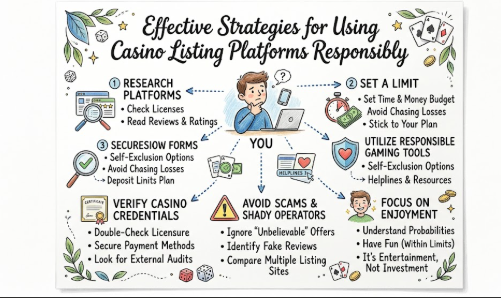
Introduction
The digital landscape is filled with thousands of online casinos, each promising unique bonuses, vast game libraries, and seamless experiences. For a newcomer or even an experienced player, distinguishing between a reputable operator and a potentially risky site can feel like navigating a maze. This is where casino listing platforms play a pivotal role. They act as bridges between players and operators, organizing vast amounts of data into digestible formats.
Understanding how casino listing platforms work is essential for anyone who values their time and financial security. These platforms do not just list casinos; they perform the heavy lifting of vetting, comparing, and summarizing the vast offerings available in the market. However, not all platforms operate with the same level of integrity. Some provide deep, data-driven analysis, while others might prioritize promotional content over factual accuracy.
This blog post is designed to empower you with the knowledge to identify high-quality listing sites. Whether you are looking for specific game types, payment methods, or regulatory compliance information, knowing how these platforms function allows you to use them as effective tools for research rather than simply clicking on the first advertisement you see. By the end of this guide, you will be able to look past the surface-level marketing and evaluate platforms based on their methodology, transparency, and commitment to player safety.
What Are Casino Listing Platforms?
Casino listing platforms are specialized websites that act as directories and review hubs for the online gambling industry. They collect, categorize, and present information about various online casinos, their bonuses, game selections, and licensing status.
At their core, these platforms serve as a filtered search engine. They connect players with operators that match specific criteria—such as a player’s geographic location, preferred deposit methods, or interest in specific game developers. They are essentially the “comparison shopping” sites of the gaming world, helping to centralize information that would otherwise take hours to find through individual site visits.
Why This Topic Matters
Financial security and responsible gaming start with informed decision-making. When you rely on a listing platform, you are essentially outsourcing part of your research process. If you understand the methodology behind how they rank casinos—such as whether they test customer support or verify licensing documentation—you are far less likely to fall for deceptive marketing.
For example, a reliable platform will explicitly state that a casino is licensed by a recognized authority like the Malta Gaming Authority (MGA) or the UK Gambling Commission (UKGC). A platform that ignores these critical details is not providing a service; it is merely facilitating traffic. Understanding the “why” behind the ranking helps you avoid sites that lack transparency.
Detailed Breakdown: The Mechanics of Casino Aggregation
To provide value, these platforms follow a structured content strategy. They generally operate using the following pillars:
- Data Collection: Gathering metadata from casinos, including welcome offers, wagering requirements, and accepted currencies.
- Expert Testing: Many top-tier platforms have “mystery shoppers” who create accounts, deposit real funds, and test withdrawal times to provide authentic feedback.
- Compliance Auditing: Checking for SSL encryption, responsible gaming tools, and valid third-party game audits (e.g., eCOGRA).
- User Intent Alignment: Organizing content based on what users actually need—such as “fastest withdrawal casinos” vs. “best mobile casinos.”
Step-by-Step Practical Guide to Using Listing Sites
- Define Your Priorities: Before looking at lists, know what you want. Are you looking for low-wagering bonuses or a wide variety of live dealer games?
- Check for Licensing Badges: Only visit platforms that list and link to the official regulatory licenses of the casinos they review.
- Evaluate the “Cons” Section: If a review only lists “pros,” it is likely a promotional site. A trustworthy platform will openly discuss a casino’s limitations.
- Verify Wagering Requirements: Ensure the platform explains the math behind bonuses.
- Look for Recent Updates: An outdated review is a red flag. Check when the content was last updated.
- Cross-Reference Information: If a site claims a casino offers a specific payment method, check the casino’s official site to confirm.
- Identify Affiliate Disclosures: Reputable platforms will disclose their affiliate nature, showing they are transparent about how they earn revenue.
Practical Real-Life Examples
- Scenario A: A player wants a high-deposit bonus. They see a “Top 10” list.
- Mistake: Clicking the #1 spot without reading the wagering terms.
- Better Action: Reading the fine print on the review page to see the 50x wagering requirement before depositing.
- Scenario B: A user finds a casino on a list that isn’t licensed in their country.
- Mistake: Ignoring local legal restrictions.
- Better Action: Using the platform’s geolocation filters to see only sites legally available in their jurisdiction.
Common Problems Readers Face
Users often struggle with information overload and deceptive formatting. Many platforms present advertisements in a way that makes them look like organic recommendations. Furthermore, the lack of standardized language regarding “risk” often leads users to assume that all listed casinos are equally safe, which is rarely the case.
Mistakes to Avoid
- Blind Trust: Never assume a casino is safe just because it appears on a “Best of” list.
- Ignoring Terms: Never claim a bonus without reading the specific terms and conditions on the casino’s own website.
- Chasing Losses: Viewing listing platforms as a way to find “guaranteed win” sites. No such site exists.
- Sharing Credentials: Never enter your details on a listing platform; only provide data directly to the official, licensed casino site.
Don’t Do This Checklist
- Don’t register at a site without verifying its license in your region.
- Don’t treat gambling as a source of income.
- Don’t rely on reviews that are several years old.
- Don’t ignore the “Responsible Gaming” section of a listing site.
Table 1: Trusted vs. Unreliable Platform Indicators
| Feature | Trusted Platform | Unreliable Platform |
| Transparency | Clear affiliate disclosure | Hidden or missing disclosure |
| Review Depth | Detailed, including downsides | Generic, positive-only marketing |
| Licensing | Links to active regulator sites | No mention or fake badges |
| Content Age | Regularly updated content | Stale, years-old information |
Table 2: Casino Content Evaluation Framework
| Evaluation Criteria | Importance | How to Verify |
| Bonus Clarity | High | Check wagering requirements and game weightings |
| Payment Transparency | High | Look for withdrawal limits and processing times |
| Support Quality | Medium | Check if they test live chat responsiveness |
| Security | Critical | Verify SSL and third-party testing certifications |
Tools and Frameworks for Evaluation
Use the “RE-VET” Framework to judge any listing site:
- R – Regulatory Link: Do they link to the official gambling authority?
- E – Experience: Does the text reflect actual site usage (testing speed, games, support)?
- V – Verification: Can you verify the bonus terms on the casino site?
- E – Ethics: Do they have a clear responsible gaming stance?
- T – Transparency: Are affiliate relationships explicitly stated?
Expert Tips
- Always use “incognito” or “private” mode if you are concerned about your browsing data.
- Prioritize sites that allow you to filter by your specific country.
- Check if the platform has a community forum or user comments section.
- Look for deep-dive reviews rather than just “top lists.”
- Verify if the platform lists the owner of the casino (the operator).
- Always check the “About Us” page of the listing platform.
- If a site uses aggressive language like “guaranteed,” leave immediately.
- Prioritize platforms that offer guides on how to play games, not just where to play.
- Bookmark platforms that provide regular updates on regulatory changes.
- Check if the site provides links to self-exclusion tools and helplines.
Case Studies
- Case 1: The New Player. A student looked for a site to play slots. They used a low-quality, ad-heavy list and signed up for a site with high withdrawal fees. Better: Used a vetted platform that highlighted “no-fee withdrawal” casinos. Result: Saved money on transaction fees.
- Case 2: The Bonus Hunter. An experienced player ignored terms and was surprised by a 60x wagering requirement. Better: Learned to look for the “Wagering Contribution” table on a review site. Result: Managed expectations and avoided frustration.
- Case 3: The Safety-First User. A user was hesitant about data security. They looked for sites that explicitly discussed SSL encryption and data privacy policies. Better: Found a platform that audited technical security. Result: Felt secure in their choice.
Risk Awareness
Online gaming carries inherent financial risks. Casinos listed on platforms are businesses, and their primary goal is to generate revenue. Regulatory, compliance, and liquidity risks exist, and it is possible to lose your deposit. Always verify that the casino is licensed in your specific jurisdiction and never gamble money you cannot afford to lose. If you feel your gaming is becoming problematic, seek help from professional organizations.
Checklist Before Taking Action
- Confirm the site is legal and licensed in your country.
- Read the bonus terms and conditions thoroughly.
- Check the withdrawal methods and associated fees.
- Ensure the platform is transparent about its affiliate model.
- Set a strict budget before you start.
- Check for available responsible gaming tools (deposit limits, self-exclusion).
- Verify the site’s security measures (HTTPS/SSL).
- Keep a record of the terms accepted at the time of sign-up.
Advanced Insights for Serious Users
For those who analyze these platforms frequently, look for Search Intent Clusters. A high-quality platform will organize content by user intent: “Beginner Guides,” “Technical Reviews,” and “Payment Method Comparisons.” This structure suggests the platform cares about educating the user, not just pushing a link. Furthermore, pay attention to Content Freshness—the gaming industry changes monthly, and a site that hasn’t updated its “Best Casinos” list in six months is not providing reliable data.
Key Terms Explained
- Wagering Requirement: The number of times you must bet the bonus amount before you can withdraw winnings.
- Affiliate Disclosure: A statement indicating that the website may earn a commission if you sign up through their link.
- Licensing Authority: A government or state body that regulates and oversees the operations of gambling sites.
- RTP (Return to Player): A percentage indicating the theoretical amount of money a game will pay back over time.
- KYC (Know Your Customer): The process where a casino verifies your identity before allowing withdrawals.
- Volatility: How often and how much a game pays out; high volatility means bigger, less frequent wins.
- SSL Encryption: Security technology that protects data transferred between your browser and the casino.
- Responsible Gaming: A set of initiatives designed to help players maintain control over their gambling.
- Self-Exclusion: A tool that allows you to block your access to a casino for a set period.
- Aggregate Data: Information compiled from many different sources into one location.
Who Should Read This Blog
This guide is intended for new online players, casual gamers interested in understanding the industry, individuals looking to compare casino bonuses safely, and anyone wanting to improve their ability to vet online service providers.
Frequently Asked Questions
- How do casino listing platforms make money?
Most listing platforms operate on an affiliate model, earning a commission when a user clicks a link and registers at a casino. - Are all casinos on listing platforms safe?
No, being listed does not guarantee safety. Always verify the casino’s license, reputation, and security independently. - How does a platform decide which casinos to list?
Platforms use a mix of criteria, including licensing status, game variety, payment methods, and historical reliability. - Can I trust the “Best Casino” list provided by a site?
Take “Best Of” lists with a grain of salt. They often prioritize sites that offer better commission rates rather than purely objective quality. - How do I know if a listing platform is trustworthy?
A trustworthy platform is transparent about its affiliate status, provides detailed, balanced reviews, and emphasizes responsible gaming. - Does a listing site have access to my account details?
No, reputable listing sites never ask for your account password or banking details; you provide those directly to the casino. - How often should I check a casino listing platform?
Check whenever you are considering trying a new casino or if you are looking for updated information on bonus offers. - What if I find an error on a listing platform?
Contact the platform via their support or feedback form; reliable sites appreciate corrections to maintain their accuracy. - Should I use multiple listing platforms for research?
Yes, cross-referencing information across two or three reputable platforms can provide a more well-rounded view of a casino. - Do listing platforms cover sports betting as well?
Many platforms provide both casino and sports betting comparisons, as these services are often offered by the same operators. - Why is the “responsible gaming” section important on these sites?
It signals that the platform prioritizes player safety and ethics over pure profit, which is a key trait of a high-quality site. - Can I find information about casino apps on these platforms?
Yes, most modern listing platforms include sections dedicated to mobile compatibility and app availability for iOS and Android.
Conclusion and Next Steps
Navigating the online casino market requires a discerning eye. By understanding how casino listing platforms work, you shift from being a passive consumer of marketing to an active researcher of services. These platforms are incredibly useful tools when used correctly—they aggregate the data, verify the licenses, and allow you to compare features side-by-side. However, the ultimate responsibility for your gaming experience rests with you.
Start your next search by applying the “RE-VET” framework discussed in this guide. Don’t be swayed by high bonus amounts or flashy graphics; look for the evidence of a legitimate, transparent operation. Always ensure you are gambling on sites that are licensed and regulated within your jurisdiction.
Moving forward, your next step should be to identify one or two platforms that consistently meet the criteria for transparency and ethics. Use these as your primary sources of information, but remember to verify every claim—especially bonus terms—directly on the casino’s official website. By maintaining a habit of skepticism and conducting thorough research, you ensure that your gaming remains an activity focused on entertainment and responsibility rather than confusion or risk. Stay informed, set your limits, and prioritize your financial well-being above all else.
