Introduction
Getting ready to play a game online should feel fun and simple. You pick a platform, create an account, deposit a small amount, and start playing. But the moment you try to withdraw your winnings, everything pauses.
The casino asks you to send copies of your ID, a utility bill, and sometimes even a selfie holding your documents. For many players, this feels frustrating, invasive, and unexpected.
This verification process is called KYC. While it can feel like a roadblock, it is a standard requirement across the regulated gaming industry. Understanding why online casinos ask for these documents and how the system works can save you time, reduce stress, and protect your funds.
What Is KYC in Online Casinos?
KYC stands for Know Your Customer. In simple terms, it is a set of rules and identity checks that financial institutions, gaming platforms, and businesses must follow to verify who their users are.
Think of it like opening a bank account. A traditional bank will not let you open an account or withdraw large sums of money without seeing your official ID and proof of address. Online casinos operate under similar legal and financial rules.
Why It Matters
Online casinos handle millions of dollars in transactions every day. Without verification, platforms would have no way to stop criminals from moving stolen money, prevent children from gambling, or stop fraudulent users from creating dozens of fake accounts to abuse bonuses.
How the KYC Process Works
The KYC process is divided into different stages depending on when you join the casino and how much money you handle.
Step 1: Basic Registration
When you first sign up for an online casino, you fill out a registration form with your basic details:
- Full legal name
- Date of birth
- Residential address
- Email address and phone number
At this stage, the casino runs automated database checks in the background to confirm that the details match public records and that you are of legal gambling age.
Step 2: Document Upload (Verification)
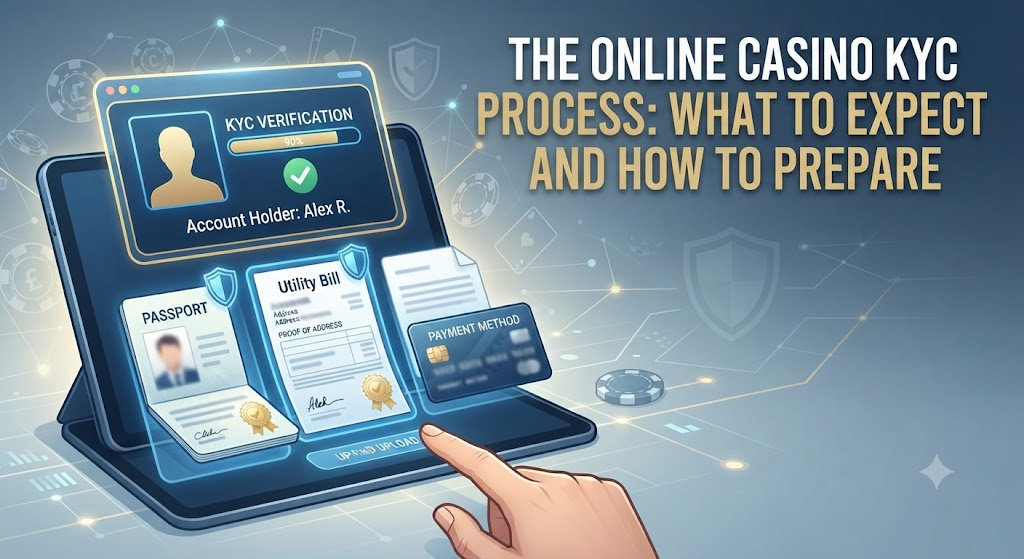
When you request your first withdrawal—or sometimes right after registration—the casino asks you to prove that the information you provided is real. You will typically need to upload digital copies of three types of documents:
- Proof of Identity (POI): A government-issued photo ID such as a passport, driver’s license, or national identity card.
- Proof of Address (POA): A recent utility bill (electricity, water, gas) or bank statement showing your name and residential address. It must usually be dated within the last three months.
- Proof of Payment Method: A photo of the credit card you used (with middle digits and the CVV hidden for security), a screenshot of your e-wallet profile, or a bank statement showing your deposit.
Step 3: Manual and Automated Review
Once uploaded, casino compliance teams or automated verification software review the images. They check for signs of tampering, mismatched names, expired documents, or blurry text. This review usually takes anywhere from a few hours to 48 hours.
Why Online Casinos Must Use KYC
Casinos do not request verification just to be difficult. They are legally and operationally required to do so for several important reasons.
- Preventing Underage Gambling: Gambling laws are strict about age limits. KYC ensures that minors cannot gamble or win money on adult platforms.
- Stopping Financial Crime: Casinos are prime targets for money laundering, where criminals try to clean illegally obtained cash by betting it and withdrawing “clean” winnings. KYC stops anonymous financial tracking.
- Fighting Identity Theft: Fraudsters sometimes steal someone else’s credit card to fund an online gaming account. Identity verification ensures that the rightful owner of the funds is the one playing.
- Bonus Abuse Protection: Some users try to create multiple accounts to claim welcome bonuses repeatedly. KYC links an individual person to a single verified account profile.
Common Mistakes Players Make During KYC
Many withdrawal delays happen because players make simple errors when submitting their documents. Avoid these common pitfalls to speed up your verification:
- Using Nicknames or Shortened Names: If your legal name is “Robert,” but you register as “Bob,” your documents will not match, causing an automatic rejection.
- Submitting Cropped or Blurry Photos: Every corner of the document must be visible. If a finger covers part of the ID or the image is out of focus, the compliance team will reject it.
- Using Expired Documents: Sending an ID card that expired last month will immediately halt your withdrawal process.
- Outdated Address Proof: Utility bills older than 90 days are generally rejected. Always use the most recent bill available.
- Using Shared Payment Methods: Depositing with a bank card or e-wallet that belongs to a spouse, friend, or family member violates casino terms and almost always fails KYC checks.
Risks and How to Protect Your Privacy
Sharing sensitive documents online always carries a degree of risk. Handing over copies of your passport and bank statements requires trust in the platform you are using.
Risks to Watch For
- Data Breaches: If a poorly secured casino gets hacked, uploaded documents could fall into the wrong hands.
- Phishing Scams: Fake websites mimicking real casinos might ask you to email your documents directly, leading to identity theft.
How to Reduce Your Risk
- Play Only on Regulated Platforms: Stick to casinos licensed by reputable authorities (such as the Malta Gaming Authority or the UK Gambling Commission), which follow strict data protection laws like GDPR.
- Watermark Your Documents: If permitted by the casino, add a subtle text watermark across your document copy stating “For Casino Verification Only — [Date]” without covering important text or numbers.
- Never Send Sensitive Codes: Legitimate casinos will never ask for your full credit card CVV number or your online banking passwords during KYC.
Checklist for a Smooth KYC Experience
Use this checklist before you submit your documents to ensure a fast, hassle-free approval:
- [ ] Match Your Details: Ensure the name and address on your casino profile match your official ID and utility bill exactly.
- [ ] Check Document Validity: Verify that your passport or driver’s license is active and not expired.
- [ ] Get Clear Photos: Take pictures in bright natural light with no flash glare hiding letters or numbers.
- [ ] Include All Four Corners: Make sure the entire ID card or paper bill is visible inside the camera frame.
- [ ] Use Personal Payment Methods: Only deposit funds using accounts registered in your own name.
Key Terms
- KYC (Know Your Customer): The mandatory process businesses use to verify the identity of their clients.
- AML (Anti-Money Laundering): Laws and regulations designed to stop criminals from disguising illegally obtained funds as legitimate income.
- Proof of Identity (POI): Official government photo identification used to confirm a person’s legal name and age.
- Proof of Address (POA): Recent official paperwork confirming where a person lives.
- Compliance: The department or practice within a company that ensures all legal rules and regulations are followed.
FAQs
When do online casinos usually ask for KYC documents?
Most online casinos request verification when you request your first withdrawal. However, some platforms require verification immediately upon registration before you can deposit or play.
How long does the KYC verification process take?
On average, verification takes between 24 and 48 hours. During busy periods, or if documents are blurry and need to be resubmitted, it can take up to several business days.
Is my personal data safe with online casinos?
Reputable, licensed casinos use advanced encryption technology (such as SSL) to protect user data and comply with strict privacy laws. Always check for a valid gaming license before sharing sensitive information.
Can I withdraw my winnings without completing KYC?
No. Regulated online casinos are legally required to verify your identity before releasing any winnings. Refusing to complete KYC will result in delayed payments or account closure.
Why was my utility bill rejected?
A utility bill is usually rejected if it is older than three months, does not clearly show your full residential address, or is a mobile phone bill (which many casinos do not accept as permanent proof of address).
Do I have to go through KYC every time I play at the same casino?
No. Once your account is fully verified, you typically do not need to repeat the process unless your identification documents expire or you change your residential address.
Conclusion
KYC is an unavoidable part of playing on modern online platforms. While uploading personal documents can feel tedious, it serves as an essential safeguard for both the player and the industry.
By keeping your personal details accurate, preparing clear photos of your documents in advance, and playing only on licensed websites, you can breeze through the verification process and ensure your payouts arrive safely and without unnecessary delays.
