Introduction
Online gaming is fast, exciting, and convenient. Players can log in from their phones or laptops anywhere in the world to spin reels, play poker, or place sports bets. But this convenience also attracts cybercriminals.
When a hacker gains unauthorized access to an online casino account, the consequences are severe. Stolen funds, compromised personal data, and drained bank accounts can ruin a player’s trust in a platform. Because online casinos hold sensitive financial information and real money balances, they are prime targets for digital theft.
Protecting these platforms requires constant vigilance. This guide explains how online casinos stop account takeovers, what technologies they use, and how players can keep their own accounts safe.
What Is an Account Takeover (ATO)?
An account takeover (ATO) is a type of cybercrime where an unauthorized person gains full control of a user’s online account.
Simple Meaning
Imagine someone steals the digital key to your house, walks inside, and locks you out. An account takeover is the exact same thing, but it happens inside a website or app.
Why It Matters
For a cybercriminal, taking over a casino account is quick money. If a player has a funded balance or saved payment methods, the hacker can quickly transfer funds, request fraudulent withdrawals, or buy items using stored credit cards. For the casino, a wave of successful account takeovers destroys customer trust and invites heavy regulatory fines.
Example
A hacker uses stolen username and password lists obtained from an unrelated data leak on an online shopping site. They try those same credentials on a popular online casino. If the player used the same password on both websites, the hacker logs in, changes the password, and drains the player’s balance within minutes.
How Online Casinos Detect and Block Account Takeovers
Stopping account takeovers requires a multi-layered defense strategy. Casinos cannot rely on passwords alone because passwords are easy to guess, steal, or buy on the dark web.
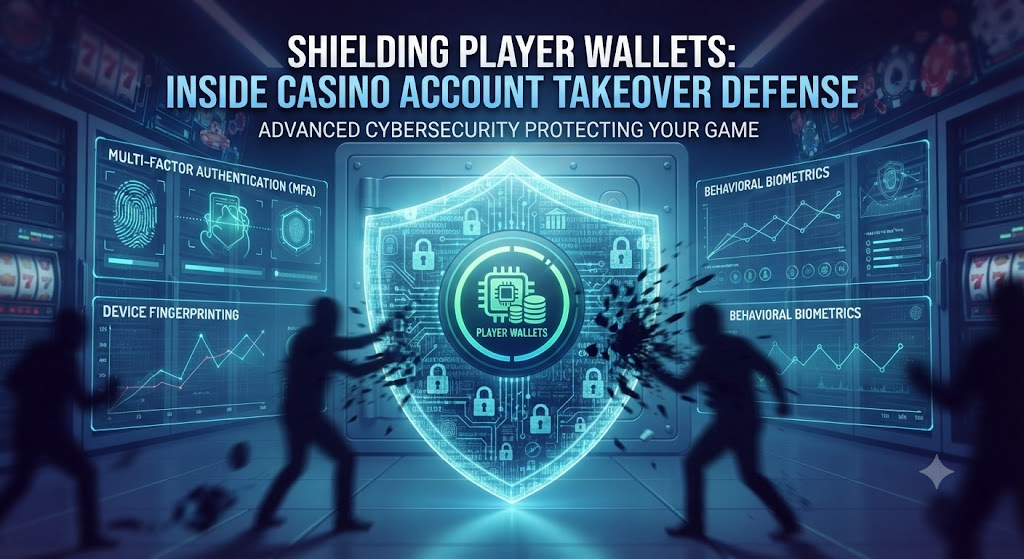
Modern platforms use sophisticated detection systems that analyze login attempts in milliseconds. Here are the core technologies used to spot intruders:
1. Multi-Factor Authentication (MFA)
Multi-factor authentication requires a user to provide two or more pieces of evidence to prove their identity before logging in.
- Something you know: Your password.
- Something you have: A temporary code sent via SMS, email, or generated by an authenticator app.
- Something you are: A fingerprint or face scan on a mobile device.
Even if a hacker steals your password, they cannot log in without your physical phone or authenticator app.
2. Device Fingerprinting
Device fingerprinting is a technology that collects data about the specific device, browser, and operating system a player uses.
- How it works: When you log in, the system checks your device details, screen resolution, language settings, and network traits.
- Why it matters: If a player usually logs in from an iPhone in Chicago using Safari, and a login suddenly appears from a desktop computer in Eastern Europe using an obscure browser, the system flags the activity as suspicious.
3. Behavioral Biometrics
Behavioral biometrics measure how a user interacts with their device, rather than just what they type.
- How it works: The system looks at typing speed, mouse movement patterns, and how a user holds or taps their smartphone screen.
- Why it matters: A bot or a human hacker types and moves a mouse differently than the actual account owner. If the typing rhythm does not match the historical profile, the casino can temporarily freeze the account or demand verification.
Why Account Takeovers Happen: Common Vulnerabilities
Understanding how hackers breach accounts helps explain why security measures are so strict.
Credential Stuffing
Cybercriminals use automated software bots to test millions of stolen username and password pairs across different websites simultaneously. Because many people reuse the same password across multiple platforms, these automated attacks succeed often.
Phishing Scams
Hackers send fake emails or create fraudulent websites that look identical to a trusted online casino. When a player enters their login details on the fake page, the criminal steals them instantly.
Session Hijacking
If a player leaves their account logged in on a public computer or an unsecured public Wi-Fi network, a malicious actor can steal their active session cookie and bypass the login screen entirely.
Real-World Considerations for Casino Security
Implementing robust security is a delicate balancing act for online operators.
- The Friction Dilemma: If a casino makes security too strict—such as requiring a multi-factor code and a captcha for every single click—players get frustrated and leave for a competitor.
- Risk-Based Authentication: To solve this, modern casinos use “frictionless security.” If you log in from your usual device at your home address, you log in instantly. If anything looks unusual, the system steps in and asks for extra verification.
Common Mistakes Players Make
Even with advanced platform security, player habits often create openings for hackers.
- Reusing Passwords: Using the same password on a low-security forum and a high-security casino account. If the forum is breached, your casino account is instantly compromised.
- Ignoring Security Alerts: Ignoring email notifications about password changes or login attempts from unfamiliar locations.
- Using Unsecured Networks: Logging into gaming accounts over public Wi-Fi without using a virtual private network (VPN) or secure connection.
Decision-Making Framework: Securing Your Gaming Account
Players can take proactive steps to protect their accounts from takeovers by following this simple framework:
- Audit Your Passwords: Ensure every online account uses a unique, complex password managed by a trusted password manager.
- Enable Extra Verification: Turn on multi-factor authentication (MFA) immediately wherever it is offered.
- Monitor Activity Logs: Regularly check your account history for unrecognized bets, deposits, or login locations.
- Beware of Links: Never click login links found in unsolicited emails or text messages; always navigate directly to the official casino website.
Key Terms
- Botnet: A network of infected computers controlled by hackers to launch automated attacks like credential stuffing.
- Credential Stuffing: An automated cyberattack where stolen account credentials are systematically tested across login pages.
- Device Fingerprinting: A method of identifying a user’s device based on hardware and software configurations.
- Multi-Factor Authentication (MFA): A security process where a user provides two or more verification factors to gain access.
- Phishing: Fraudulent communication designed to trick individuals into revealing sensitive personal data.
- Session Cookie: A small piece of data stored on your browser that keeps you logged into a website.
FAQs
What is the most common way hackers access casino accounts?
The most common method is credential stuffing, where hackers use automated bots to test stolen usernames and passwords from unrelated data breaches on casino login pages.
Does turning on two-factor authentication completely stop account takeovers?
While it does not stop 100% of advanced attacks, multi-factor authentication blocks the vast majority of automated and remote account takeover attempts because hackers lack physical access to your verification device.
Can online casinos reverse unauthorized withdrawals if an account is hacked?
Most reputable online casinos have dedicated fraud investigation teams. If an account takeover is reported quickly, transactions can often be frozen, investigated, and reversed under regulatory guidelines.
Why do casinos ask for identity verification (KYC) after a suspicious login?
Know Your Customer (KYC) protocols protect both the platform and the player by ensuring that the person controlling the account is the legal owner before allowing major financial transactions.
How often should I change my casino account password?
You do not need to change your password constantly if it is strong and unique. However, you should change it immediately if you suspect a data breach on any platform you use.
Are mobile casino apps safer than browser versions?
Mobile apps often provide stronger security because they can securely integrate with device-level features like Face ID, fingerprint scanners, and secure hardware enclaves.
Conclusion
Account takeovers pose a serious threat in the digital gaming world, but modern online casinos use advanced defense mechanisms like device fingerprinting, behavioral monitoring, and multi-factor authentication to stop criminals in their tracks. Security is a shared responsibility: while casinos build robust technological walls, players must practice good cyber hygiene by using unique passwords and enabling extra verification steps. Staying vigilant ensures a safe and secure gaming environment for everyone.
