Introduction
Running a modern online casino means managing a high-stakes digital environment. Every minute, players deposit money, place bets, and share personal information. Because real money moves constantly through these platforms, cybercriminals view online casinos as prime targets.
A single security breach can destroy a brand’s reputation overnight, lead to massive regulatory fines, and cause players to take their business elsewhere. Understanding casino cybersecurity basics is no longer optional for operators; it is the foundation of a sustainable gaming business. This article explores what operators need to know to protect their platforms, secure player data, and maintain operational integrity.
What Is Casino Cybersecurity?
Casino cybersecurity is the practice of defending digital gambling systems, networks, and databases from unauthorized access, cyberattacks, and data theft.
Why It Matters
Online casinos handle sensitive assets, including player identification documents, credit card numbers, bank details, and active betting balances. If attackers compromise these assets, both the operator and the players suffer immediate financial and legal damage.
Example
Imagine a hacker breaking into a casino database and stealing credit card details. The players lose their money, and the casino faces lawsuits, loss of licensing, and permanent closure due to destroyed trust.
How Online Casino Security Works
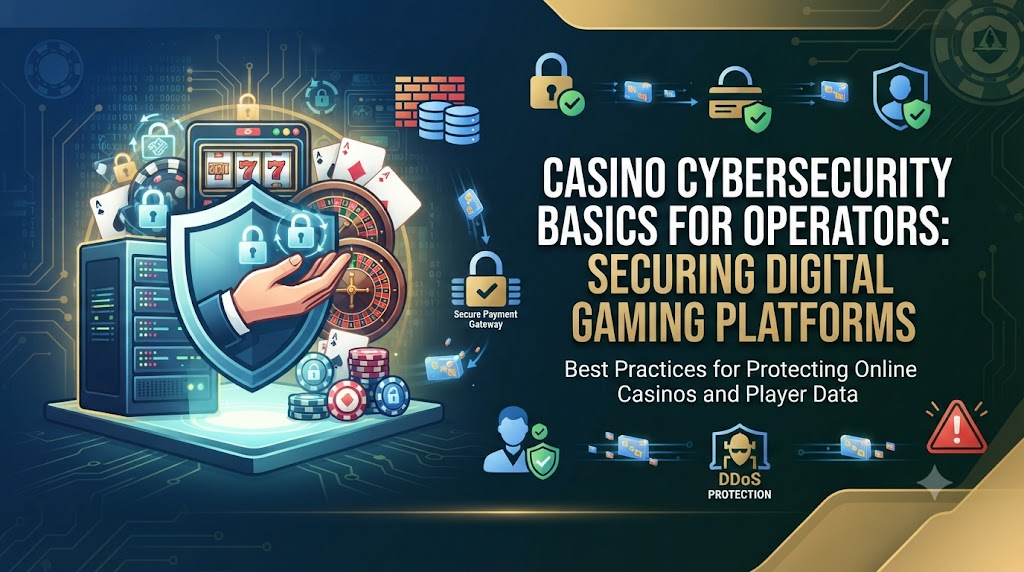
Casino security operates in layers, much like a physical casino uses security guards, locked doors, and secure vaults. No single tool stops every attack. Instead, multiple security measures work together to detect and block threats.
Core Layers of Protection
- Perimeter Defense: Firewalls and traffic monitors block malicious bots and unauthorized connection attempts before they reach the main server.
- Data Encryption: Advanced cryptography scrambles player passwords and financial data so hackers cannot read it even if they intercept it.
- Identity Verification: Systems confirm that players are who they say they are, preventing underage gambling and account takeover fraud.
- Transaction Monitoring: Real-time software tracks deposits and withdrawals to flag suspicious or fraudulent money movements.
Why Cybersecurity Matters for Operators
Operators face unique threats compared to standard e-commerce websites. The presence of fast-paced financial transactions and high-value player accounts makes security a top operational priority.
Key Reasons to Prioritize Security
- Regulatory Compliance: Gaming regulators require strict security standards. Failing an audit can result in the loss of a gaming license.
- Financial Protection: Robust security stops chargeback fraud, bonus abuse, and unauthorized withdrawals.
- Player Retention: Players stay loyal to platforms they trust with their personal and financial information.
Important Factors to Understand
To build a secure gaming platform, operators must understand several critical components that influence digital safety.
1. Encryption and Data Protection
All data moving between the player’s device and the casino server must be encrypted. Secure Sockets Layer (SSL) and Transport Layer Security (TLS) protocols ensure that eavesdroppers cannot read transmitted information.
2. Access Control
Not every employee needs access to all parts of the casino system. Restricting access based on job roles ensures that a compromised staff account cannot jeopardize the entire platform.
3. Software Integrity
Casino games rely on software called a Random Number Generator (RNG) to ensure fair play. If hackers tamper with game code, they can manipulate outcomes, destroying fairness and legality.
Detailed Explanation: Common Threats and Defenses
Understanding common cyber threats helps operators deploy the right defenses.
Distributed Denial of Service (DDoS) Attacks
Attackers flood the casino website with fake traffic to crash the server, knocking the platform offline during major sporting events or peak gaming hours.
- Defense: Using cloud-based traffic scrubbing services to absorb malicious traffic while letting real players through.
Credential Stuffing
Bots test stolen username and password pairs from other websites against the casino login page to break into player accounts and steal balances.
- Defense: Implementing Multi-Factor Authentication (MFA) and behavioral analysis tools to block automated login attempts.
Insider Threats
Employees with high-level system access might misuse their privileges to alter game data, steal funds, or leak player information.
- Defense: Logging all administrative actions and requiring dual-authorization for sensitive tasks.
Practical Examples
Scenario: Preventing Bonus Abuse
A group of fraudsters creates hundreds of fake accounts to claim introductory casino bonuses, draining the operator’s promotional budget.
- Solution: The operator implements strict Know Your Customer (KYC) checks and device fingerprinting to detect when one person creates multiple accounts from the same hardware.
Scenario: Securing Payment Gateways
A player deposits funds using a credit card. If the payment gateway is insecure, hackers can intercept the card details.
- Solution: The operator integrates with Payment Card Industry Data Security Standard (PCI-DSS) compliant payment processors to handle transactions securely without storing raw card data on their own servers.
Real-World Operational Considerations
Maintaining security is an ongoing operational process, not a one-time setup task.
- Continuous Monitoring: Security teams must monitor network logs 24/7 to spot unusual patterns, such as sudden spikes in password reset requests.
- Software Updates: Gaming software, operating systems, and plugins must be patched regularly to close newly discovered security vulnerabilities.
- Staff Training: Employees must learn how to spot phishing emails and social engineering tactics designed to trick them into giving away network credentials.
Common Mistakes
| What People Do | Why They Do It | Why It Causes Problems | What They Should Do Instead |
| Using default admin passwords | It is fast and easy during initial setup | Hackers can guess default passwords instantly | Require strong, unique passwords and change them regularly |
| Skipping software updates | Updates can cause temporary downtime or break features | Outdated software contains known security flaws that hackers exploit | Establish a scheduled maintenance window for regular patching |
| Ignoring small security alerts | Staff assume minor alerts are false alarms | Attackers often test defenses with small probes before a major breach | Investigate every unusual alert promptly |
Risks and Limitations
The Cost-Security Balance
Implementing top-tier security requires significant financial investment in software licenses, security audits, and expert personnel. However, skimping on these costs exposes the business to catastrophic losses during a breach.
User Friction vs. Security
Adding too many security steps, such as complex captchas and frequent verification prompts, can frustrate players and drive them to competitor sites. Operators must balance robust security with a smooth user experience.
Decision-Making Framework for Operators
When evaluating security measures, operators should follow a clear step-by-step process:
- Assess Assets: Identify what data, systems, and funds need protection.
- Identify Vulnerabilities: Review the platform architecture to find potential weak spots.
- Evaluate Regulations: Check local and international licensing requirements for mandatory security controls.
- Select Tools: Choose proven security software, firewalls, and encryption protocols.
- Test Defenses: Conduct regular penetration testing (ethical hacking) to find flaws before real attackers do.
- Review and Update: Continuously adjust security policies as new cyber threats emerge.
Checklist for Casino Operators
- Is all player and transaction data encrypted using modern TLS protocols?
- Are administrative accounts protected by multi-factor authentication?
- Is a robust KYC process in place to verify player identities?
- Are regular penetration tests and vulnerability scans scheduled?
- Does the platform comply with PCI-DSS standards for payment handling?
- Is there an incident response plan ready if a security breach occurs?
Key Terms
- Encryption: Converting readable data into unreadable code to prevent unauthorized reading during transmission.
- Firewall: A security system that monitors and controls incoming and outgoing network traffic based on predetermined rules.
- KYC (Know Your Customer): A process where casinos verify the identity of their players to prevent fraud and money laundering.
- Malware: Malicious software designed to damage, disrupt, or gain unauthorized access to computer systems.
- Penetration Testing: Authorized simulated cyberattacks on a computer system to evaluate its security.
- PCI-DSS: Security standards designed to ensure all companies that accept, process, store, or transmit credit card information maintain a secure environment.
- RNG (Random Number Generator): An algorithm used in digital casino games to ensure random and fair outcomes.
- Two-Factor Authentication (2FA): A security process where a user provides two different authentication factors to verify themselves.
FAQs
Why is cybersecurity more critical for online casinos than standard websites?
Online casinos handle direct financial transactions, large account balances, and sensitive personal documents. This makes them high-value targets for organized cybercrime compared to standard informational websites.
What is the most common cause of casino security breaches?
Human error, such as employees falling for phishing emails or using weak passwords, remains one of the leading causes of security compromises.
How does KYC help with cybersecurity?
KYC verifies that players are real people using legitimate identities. This stops fraudsters from using stolen financial details or fake accounts to move illicit funds through the casino.
How often should an online casino undergo security testing?
Operators should perform vulnerability scans continuously and conduct comprehensive third-party penetration testing at least annually, or major software updates.
Can absolute 100% security be achieved in online gambling?
No system is entirely immune to attacks. Effective cybersecurity focuses on minimizing risk, detecting threats quickly, and building resilience to recover rapidly if an incident occurs.
Conclusion
Casino cybersecurity is a vital pillar of any successful digital gaming operation. By implementing layered defenses, maintaining strict data encryption, and prioritizing regular security audits, operators protect their platforms, their finances, and their players. Security is not a one-time project; it is a continuous commitment to staying ahead of digital threats while delivering a safe and fair gaming experience.
