Introduction
Getting started with online gaming can feel exciting, but looking at a long list of payment options can quickly become confusing. Words like e-wallets, processing fees, and withdrawal verification can make a simple deposit feel complicated.
Choosing the wrong payment method can lead to unexpected fees, delayed payouts, or even trouble claiming welcome bonuses. Understanding how these financial systems work helps you keep your money safe, manage your budget, and avoid frustration when it is time to cash out your winnings.
This guide breaks down how casino payment methods work, what options are available, and how to choose the safest path for your funds.
What Are Casino Payment Methods?
Casino payment methods are the bridge between your personal bank account and the gaming platform. Just like shopping online, you need a secure way to transfer money back and forth.
When playing online, your financial transactions are split into two main actions:
- Deposits: Moving money from your account into the casino so you can play. This is almost always instant.
- Withdrawals (Payouts): Moving your winnings from the casino back to your personal account. This usually takes time because casinos must review and approve payout requests for security.
Why Payment Methods Matter
Your choice of payment method directly affects your gaming experience. A good payment method gives you fast access to your money without taking a large chunk in fees. A poor choice can trap your winnings in verification delays for over a week.
How Online Casino Payments Work
Behind every button click is a secure digital handoff between the casino, a payment processor, and your financial institution.
Here is what happens when you fund an account:
- Selection: You choose a payment provider and enter the amount you want to deposit.
- Authorization: The payment processor checks your details and confirms funds are available.
- Encryption: Your data is scrambled using secure protocols so hackers cannot read it.
- Settlement: The money moves from your provider to the casino, usually within seconds.
Withdrawals follow the reverse path, but with an extra step: internal casino review. Before sending your money, the casino checks your account to verify your identity and ensure you followed all bonus rules.
Main Categories of Casino Payment Methods
Different payment methods offer different balances of speed, privacy, and convenience.
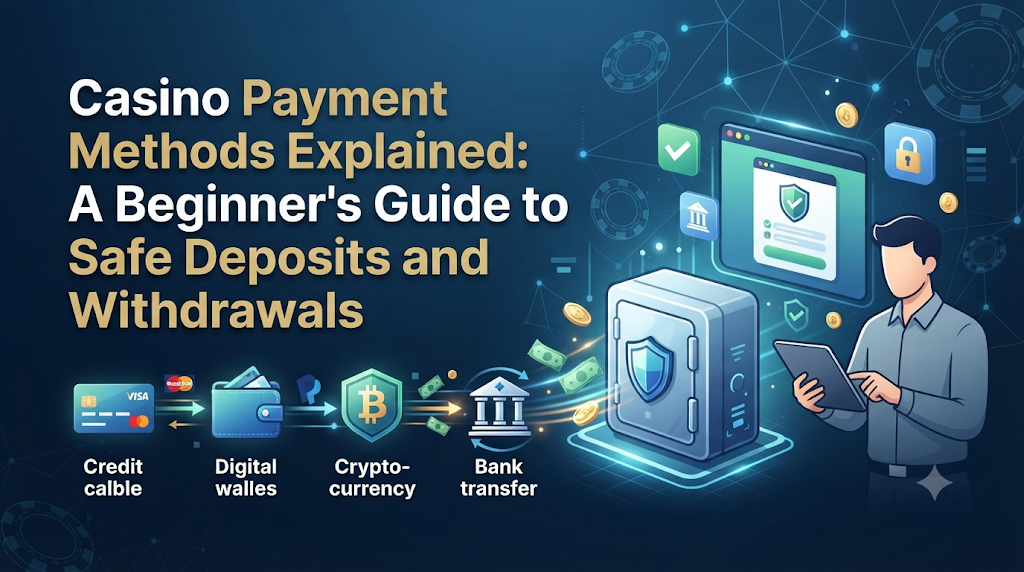
1. Debit and Credit Cards
Cards like Visa and Mastercard are the most common payment options available at almost every online platform.
- How they work: You type in your 16-digit card number, expiration date, and security code, just like buying something online.
- Pros: Widely accepted, easy to use, and familiar to most beginners.
- Cons: Withdrawals back to cards can take anywhere from 3 to 5 business days, and some banks block gaming transactions.
2. Electronic Wallets (E-Wallets)
Services like PayPal, Skrill, and Neteller act as a digital middleman between your bank and the casino.
- How they work: You link your bank or card to your e-wallet app. You then use your e-wallet to fund the casino without sharing your direct bank details with the gaming site.
- Pros: Extremely fast withdrawals (often within hours), high security, and strong privacy.
- Cons: Some e-wallets exclude you from claiming initial welcome bonuses.
3. Prepaid Vouchers
Vouchers like Paysafecard allow you to load cash onto a prepaid card or digital voucher.
- How they work: You buy a voucher with cash or card from a local store or online, then type the PIN code into the casino deposit screen.
- Pros: Great for budgeting because you can only spend what is on the card; excellent privacy.
- Cons: You generally cannot withdraw money back onto a prepaid voucher, forcing you to pick an alternative payout method.
4. Cryptocurrencies
Digital currencies like Bitcoin, Ethereum, and Litecoin are becoming popular choices for online transactions.
- How they work: You transfer digital coins from your personal crypto wallet to the casino wallet using a secure code network.
- Pros: Fast global transfers, very high privacy, and often lower transaction fees.
- Cons: Cryptocurrency prices change constantly, and transactions cannot be reversed if you send money to the wrong address.
Important Factors to Compare
When choosing how to move your money, look closely at four key metrics:
- Processing Speed: How long does it take for money to reach your account? Deposits are usually instant, but payouts vary widely.
- Transaction Fees: Does the casino or payment provider charge a percentage or flat fee to move your money?
- Transaction Limits: What is the minimum and maximum amount you can deposit or withdraw at one time?
- Bonus Eligibility: Do certain payment methods block you from receiving promotional offers? (For example, deposits made with specific e-wallets sometimes do not qualify for sign-up bonuses).
Common Beginner Mistakes
Making mistakes with your money can sour your gaming experience. Here are common errors and how to avoid them.
- Mistake: Forgetting to check withdrawal limits before depositing.
- Why it happens: Beginners focus only on how easy it is to put money in.
- Why it causes problems: You might win a large amount, only to find out the casino has low weekly payout limits, making it take months to get your full balance.
- What to do instead: Check the cashier terms for maximum cashout limits before you make your first deposit.
- Mistake: Using a payment method that does not match your identity.
- Why it happens: Using a spouse’s card or a friend’s e-wallet for convenience.
- Why it causes problems: Casinos require strict verification (KYC checks). If the payment name does not match your registered casino account name, your payout will be frozen.
- What to do instead: Always use financial accounts registered in your own legal name.
- Mistake: Ignoring currency conversion fees.
- Why it happens: Playing on a platform that uses a different currency than your local bank account.
- Why it causes problems: You lose extra money every time you deposit and withdraw due to bad exchange rates.
- What to do instead: Choose a payment method and platform that support your local currency directly.
Risks and Limitations
Every financial transaction carries inherent risks. Understanding them keeps your funds secure.
- Risk: Phishing and data theft.
- Why it matters: Typing your card details into unsecured or fraudulent websites can lead to stolen funds.
- How to reduce it: Stick to licensed, reputable platforms and use e-wallets or two-factor authentication to add an extra layer of defense.
- Risk: Account verification delays.
- Why it matters: Your first withdrawal is often delayed while the platform reviews your identity documents.
- How to reduce it: Complete your identity verification (sending a photo ID and proof of address) right after creating your account, rather than waiting until you want to withdraw.
Payment Methods Comparison
| Payment Method | Deposit Speed | Withdrawal Speed | Typical Fees | Best Used For |
| Debit/Credit Cards | Instant | 3–5 Business Days | Low to None | Everyday users who want simple, familiar transactions. |
| E-Wallets | Instant | 0–24 Hours | Low to Medium | Fast payouts and keeping banking details private. |
| Prepaid Vouchers | Instant | Not Available | None to Low | Strict budget control and anonymous deposits. |
| Cryptocurrency | Near Instant | Minutes–Hours | Network Gas Fees | Maximum privacy and rapid global transfers. |
Beginner Verification Checklist
Before you fund an account, run through this quick verification checklist to ensure a smooth experience:
- Confirm the platform uses secure SSL encryption (look for the padlock icon in the browser address bar).
- Verify that your chosen deposit method can also be used for withdrawals.
- Check if the payment method qualifies for any welcome bonuses you plan to use.
- Have your identification documents ready for the initial payout verification check.
- Set a strict budget limit before entering your payment details.
Key Terms
- KYC (Know Your Customer): The mandatory identity check where a casino asks for proof of ID and address to prevent fraud.
- Payment Processor: A third-party company that handles the secure transfer of money between your bank and the merchant.
- Two-Factor Authentication (2FA): A security step where you must confirm a login or transaction using a code sent to your phone or email.
- Pending Period: The time frame during which a casino reviews a withdrawal request before sending the money out.
- Minimum Deposit: The smallest amount of money the platform will accept in a single transaction.
Frequently Asked Questions
Which casino payment method is the fastest for withdrawals?
E-wallets and cryptocurrencies are typically the fastest options, often delivering winnings within minutes or hours of approval. Traditional bank cards and wire transfers take several business days.
Are online casino payments safe?
Yes, provided you use reputable, licensed platforms that utilize modern encryption technology. Using e-wallets or prepaid options adds extra security because you do not have to share your primary bank card numbers directly with the gaming site.
Why do casinos ask for documents when I try to withdraw?
Casinos are legally required to verify customer identities to prevent money laundering, underage gambling, and fraud. This is a standard safety procedure known as KYC.
Can I withdraw money using a prepaid voucher?
Generally, no. Because prepaid vouchers like Paysafecard are designed for one-way spending, you will need to select an alternative payout method, such as a bank transfer or e-wallet, to collect your winnings.
Do payment methods affect my eligibility for bonuses?
Yes. Many gaming platforms exclude deposits made via specific e-wallets (such as Skrill or Neteller) from qualifying for sign-up or deposit bonuses. Always read the promotional terms first.
What should I do if my deposit is declined?
First, check that your card details and billing address match correctly. If details are correct, your bank may be blocking gaming transactions. Contact your bank or try an alternative payment method like an e-wallet.
Conclusion
Choosing the right casino payment method comes down to balancing speed, privacy, and convenience. While traditional bank cards offer familiarity, modern e-wallets and digital currencies provide faster access to your money.
By understanding processing speeds, checking for hidden fees, and completing your account verification early, you can avoid unnecessary delays and keep your gaming experience secure and hassle-free.
